An EV that dies on Lower Wacker often has a 12V that drained in a no-signal underground garage. The screens stay dark. The handles act weird. The big pack still holds energy. The operator we connect you with brings a 12V jump kit and a 240V Level 2 source to the curb.
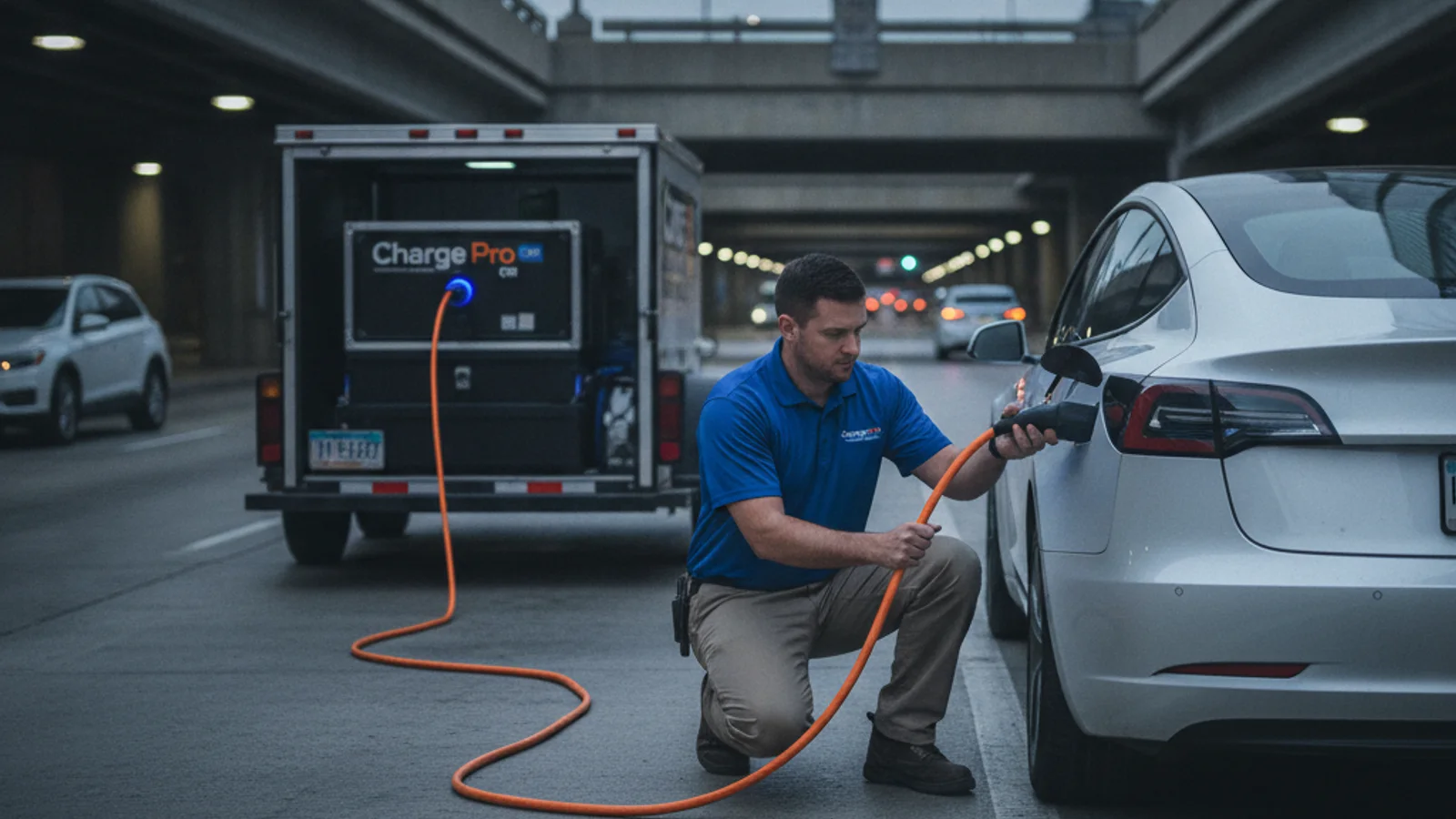
Why Lower Wacker kills 12V batteries
Lower Wacker is the underground street level below Wacker Drive. Cell signal drops to almost nothing in the concrete tunnels. Some EV apps can’t reach the car. The remote climate, the remote wake, and the remote diagnostics don’t work. The 12V sits in a cold pocket with no signal from above.
Parking structures under downtown Chicago sit the same way. Some are above ground but surrounded by towers. Some are partially underground. Many have weak cell signal. The 12V drains from background systems without ever getting a wake from above. Cold weather multiplies the drain.
January in Chicagoland has averaged a high of 31.6F and a low of 18.8F. The polar vortex of January 2019 sat at -23F at O’Hare on January 30. The January 2024 cold snap hit about -10F at O’Hare on January 14 and 15. A car parked on Lower Wacker during those stretches loses 12V capacity fast.
What to do first when the EV won’t wake in a garage
Before you dial the referral line, walk the easy steps. They cost nothing but a few minutes.
Unlock with the physical key. Most EVs hide a mechanical blade in the fob. Pop the cover near the door handle and slide the blade in. Some cars wake when the blade turns. Some just open the door.
Try the charge port door. If the door won’t open, that’s the 12V, not the pack. A frozen latch and a dead 12V feel the same from outside. Don’t yank a stuck cable. Don’t pour hot water on a frozen door.
Look at the app on your phone. If the app shows range and the car shows nothing, the 12V is the suspect. If the app shows zero range, the big pack is empty. Both jobs land on the operator we connect you with. They’re different visits.
If the high-voltage pack is truly empty, leave the car where it is. The operator brings a 240V Level 2 source. They quote before they start. They bill you directly.
What the operator we connect you with does
Charge Pro CHI is a referral line. We match you with independent local operators. The pros we send bring a 240V Level 2 source and a 12V jump kit. NACS handles Tesla. CCS or J1772 adapters handle non-Tesla EVs. Same visit, sometimes.
If the 12V is the only problem, the operator can swap it on site in many cases. If the big pack is the real problem, a boost takes 15 to 30 minutes and adds about 10 to 20 miles of range. That’s plug time, not a clock about when someone shows up. Use those miles to drive to a charger.
We don’t publish hours. We don’t promise an arrival window. The operator tells you what they can do on the call. If you don’t like the quote, you don’t have to take the job.
Why a boost beats a tow for most Lower Wacker stalls
A flatbed still leaves you with an empty pack or a dead 12V. The car doesn’t get charged by being lifted. A wrong tow can also damage the underbody. Many EVs need a flatbed so the drive units don’t drag. A flatbed getting into Lower Wacker is also its own challenge. Ramps are tight. Heights are posted.
A boost leaves the car where it is and adds the energy to drive it out. The operator drives to the entrance. The cables reach the car through the ramp. The car wakes up. The driver pulls out under their own power. No tow needed.
12V no-start is a different case that often travels with the empty pack. The operator can jump the 12V on the same visit. That wakes the car so the boost can flow. A 12V-only stall doesn’t need a 240V boost. It needs the small battery handled.
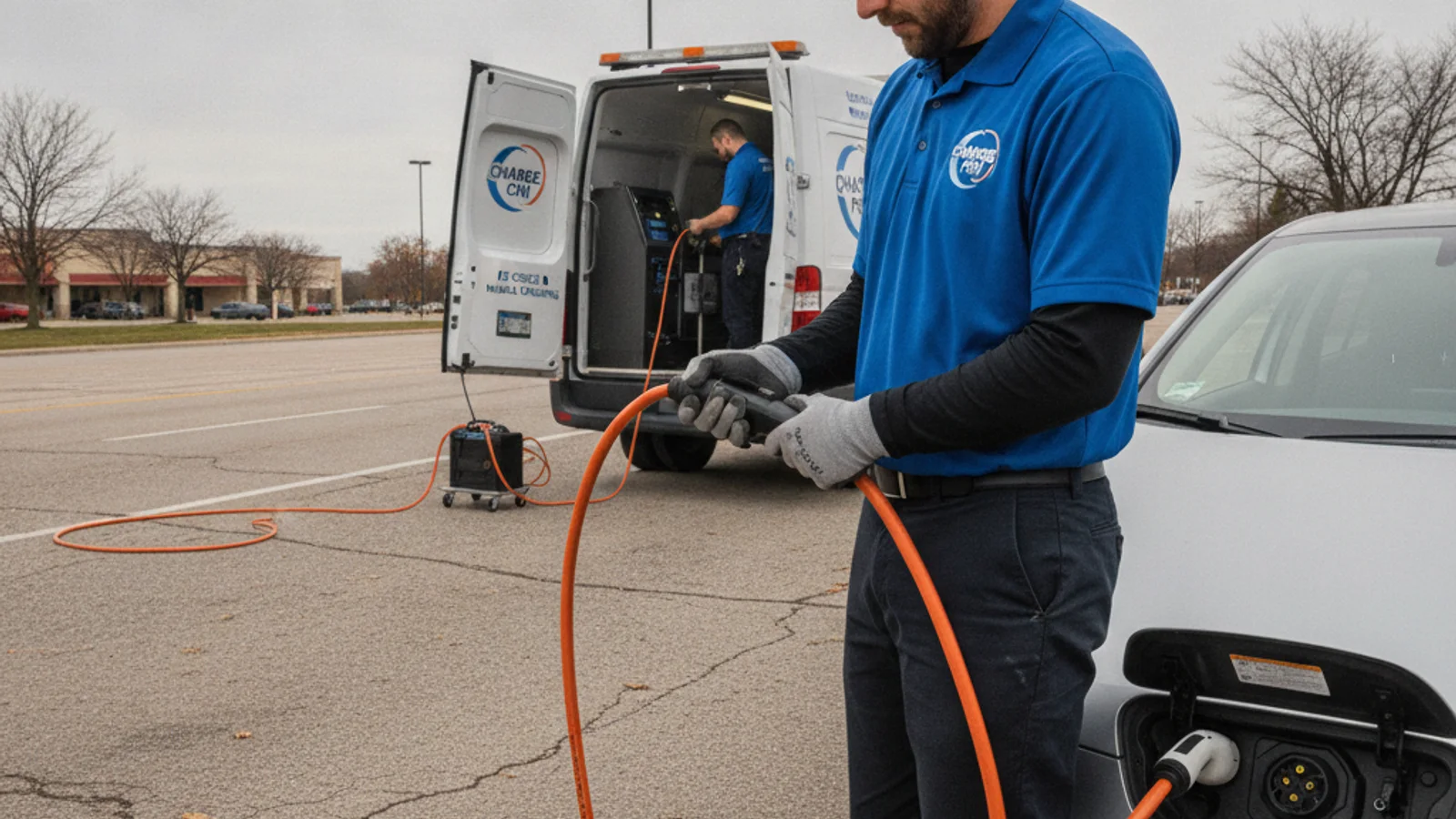
Where the stall usually happens downtown
Lower Wacker is the longest underground lane in downtown Chicago. It runs along the Chicago River between Orleans and the lake. Stalls here are common after dark when the surface streets get quiet. Drivers come down to find parking. They leave their car overnight. They come back to a brick.
Upper Wacker is the street-level road above Lower Wacker. The surface streets feed it. A stall on Upper Wacker is a different access problem than Lower Wacker. Say which level you’re on.
Lake Shore Drive carries the lakefront traffic. Lower Wacker feeds off it. The Mag Mile sits to the north. The Loop sits to the south. A stall near the Michigan Avenue bridge is a tourist area. A stall near Congress Parkway is a commuter area. They’re not the same parking lot.
IDOT Emergency Traffic Patrol (“Minutemen”) covers the major Chicago expressways. They help stalls, debris, and tires. They do not publish EV charging. They may not reach Lower Wacker. Dial *999 for expressway help. The mobile operator handles Lower Wacker.
Empty pack versus a 12V that froze the car
From the sidewalk they look identical. The EV isn’t moving. Inside the car, they’re different jobs. Say the right one on the call.
| What you see | What it usually means | | Pack at zero, car won’t roll | High-voltage pack needs a 240V boost | | Pack still shows miles, screens dark | 12V battery needs a jump or swap | | Port or door won’t open in the cold | Latch, freeze, or 12V, not a guess from the sidewalk |
A frozen charge door is another winter stall. It can look like a dead car. It isn’t always empty. Don’t yank the cable. Don’t pour random water on a latch. Tell the operator the door won’t move.
How the call actually works
Tell the operator what the car is doing. Pack still shows miles, screens dark is a 12V. Pack at zero is a boost. Tell them make, model, and year. Tell them where you are, including the nearest cross street and which level. Lower Wacker between Michigan and Columbus is different from Lower Wacker between Orleans and Wacker.
The pros we send quote before they start. They bill you directly. If you don’t like the quote, you don’t have to take the job. We don’t promise an arrival window. We don’t publish hours.
What to do when the car stops
Get the car to a safe spot if it will still roll. Lot, shoulder, or side street. Hazards on.
Read the dash, or the app. Empty pack, 12V warnings, or a port that won’t open are different sentences. Take a photo of the screen if you can.
Pin the map. Add Lower Wacker, Upper Wacker, Lake Shore Drive, the river, the bridge, or the building. Add a cross street. Add the ZIP if you know it.
Call for the match when you’re ready. Stay with the car unless you need to get out for safety.
Hear the quote. 15 to 30 minutes of charging is typical. That usually adds about 10 to 20 miles. That clock is charging, not travel.
Frequently asked questions
Why does Lower Wacker kill my EV’s 12V?
Cell signal drops in the underground tunnels. The EV’s apps can’t reach the car. The 12V drains from background systems without a remote wake. Cold weather multiplies the drain. The car looks fine in the evening. The next morning the screens are dark.
Can the operator reach my car in an underground garage?
Yes, in most cases. The truck parks at the entrance. The cables reach the car through the ramp. Some garages have height limits. Tell the operator which level you’re on and which entrance is closest.
What if my pack shows range but my screens are dark?
That’s a 12V, not a pack. The operator jumps or swaps the small battery on site. The pack wakes once the 12V closes the contactors. Dark screens, odd locks, and a pack that still shows miles all point at 12V. Don’t keep hitting start. Describe that mix on the call.
When you need the match downtown, call Charge Pro CHI at (858) 925-5546. An independent operator quotes the work. You decide. They bill you directly.