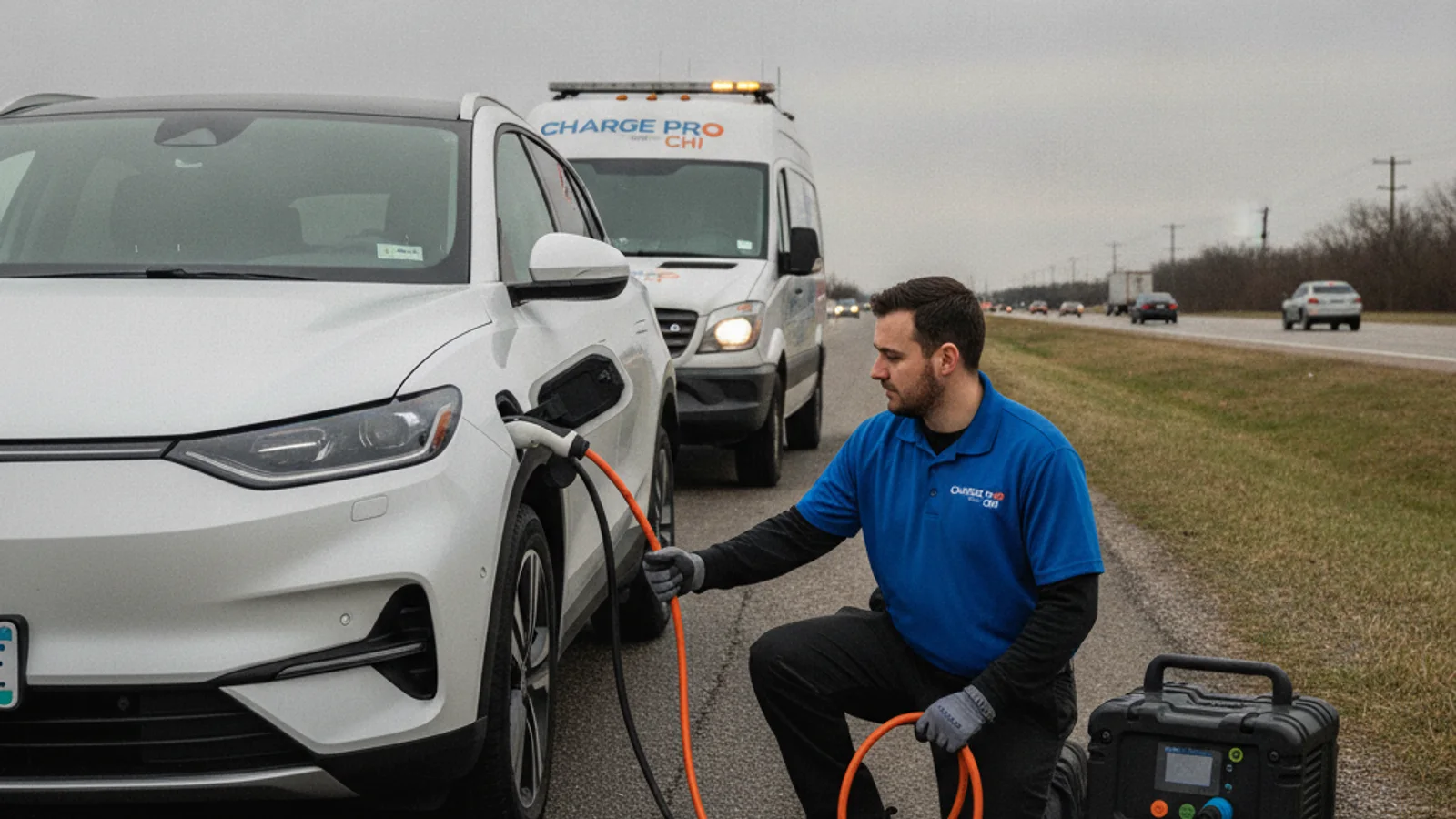
A fleet or delivery EV that stalls in Plainfield after a commute gets a 240V Level 2 boost at the curb instead of a flatbed. The mobile operator we connect you with brings the energy to the van at the lot or the shoulder.
Why Plainfield drivers stall after a commute
Plainfield sits in Will County. I-55 and I-80 cross the village. The logistics belt runs through Plainfield the same way it runs through Joliet and Romeoville. Fleet and delivery EVs work those roads all day, then stall in the lots.
A gauge that looked fine at dawn is a different number by late afternoon. Cabin heat in January pulls hard on a loaded van. Summer air and an I-55 crawl pull just as hard. The van still has boxes, and the driver still has a window. Sitting at a public stall isn’t how these routes run.
Housing stock explains the other half of the pattern. Only 6.7% of Plainfield homes were built before 1980. A lot of residents already charge in the garage on ComEd power. When an EV dies here, it is more often a work vehicle. The stall is on the interstate or in a business park. It’s less often a car that never left the driveway.
ComEd is the utility here. Time-of-use programs exist for EV charging. We couldn’t confirm a current tariff that belongs in this article. Check with ComEd. Read your own bill. Don’t plan around a number from a forum.
When home charging isn’t the problem
A commute stall at the curb looks different from a driveway stall. The van was driven hard, sat in traffic, and ran climate all day. The 12V has been working overtime. The big pack has been working overtime. Something gave.
Most commute stalls are 12V issues that ride along with low pack. The dash stays dark. The handles act weird. The contactors won’t close. The car wasn’t empty when it stalled. It just can’t wake to show its state.
Some commute stalls are full empty packs. The driver stretched range to make a delivery window. The van stopped on the off-ramp. Get out of a live lane if the van will still roll. Hazards on. Stay belted unless you’re in danger. Tell the operator if you’re on the tollway versus a surface street.
What the operator we connect you with does
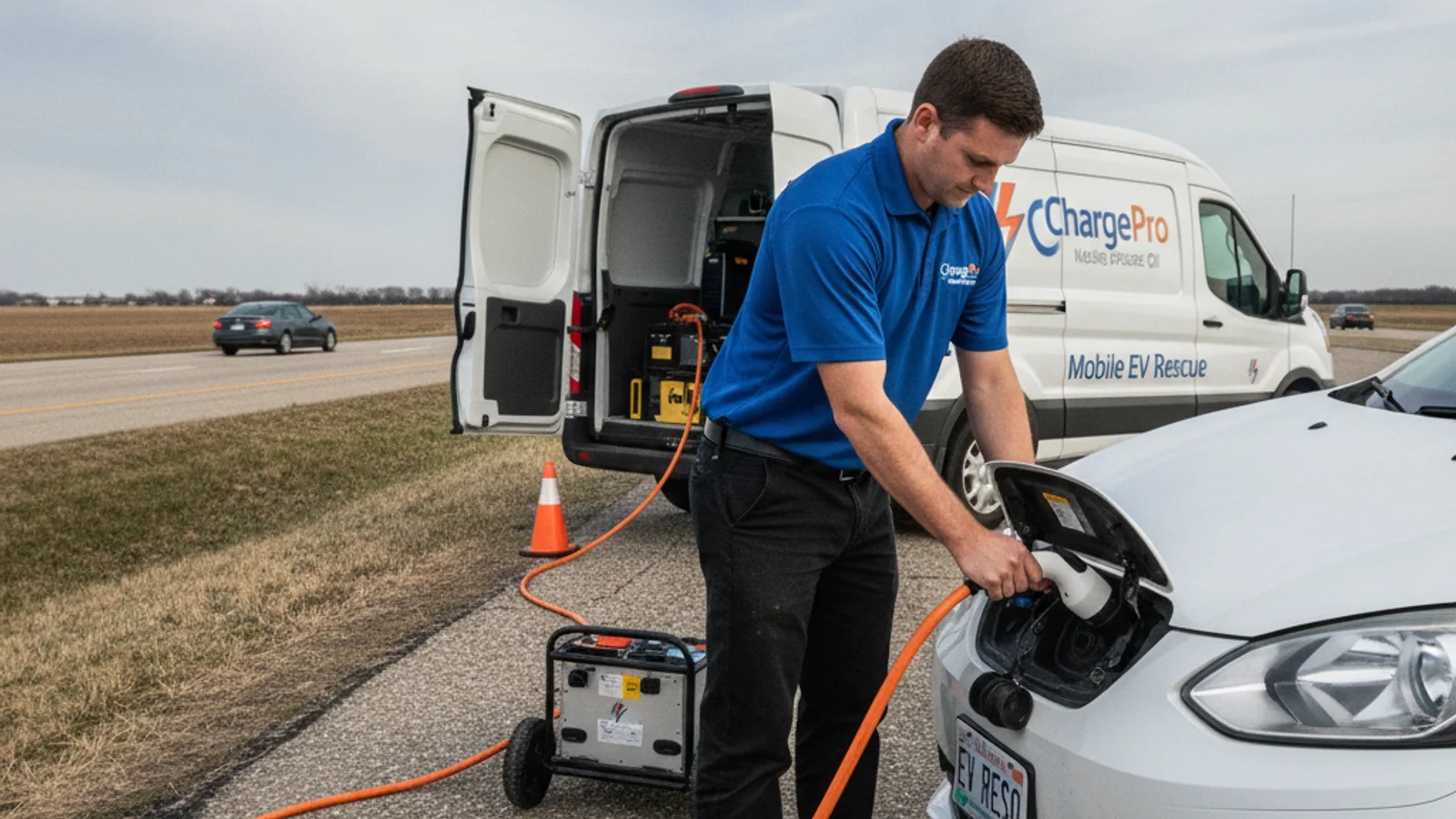
Charge Pro CHI is a referral line. We match you with independent local operators. The pros we send bring a 240V Level 2 source to your curb. They bring the 12V jump kit too. NACS handles Tesla. CCS or J1772 adapters handle non-Tesla EVs. Same visit, sometimes.
If the 12V is the only problem, the operator can swap it on site in many cases. If the big pack is the real problem, a boost takes 15 to 30 minutes and adds about 10 to 20 miles of range. That’s plug time, not a clock about when someone shows up. Use those miles to drive to a charger or back to the depot.
We don’t publish hours. We don’t promise an arrival window. The operator tells you what they can do on the call. If you don’t like the quote, you don’t have to take the job.
Why a boost beats a tow for most Plainfield stalls
A flatbed still leaves you with an empty pack or a dead 12V. The car doesn’t get charged by being lifted. A wrong tow can also damage the underbody. Many EVs need a flatbed so the drive units don’t drag. The tow’s flatbed doesn’t add range. The mobile charger does.
A boost leaves the car where it is and adds the energy to drive it. That saves the tow cost and the underbody damage. It also skips the second wait at a public charger with a car that might not wake.
For fleet work, a boost gets the van back on the route. The delivery window closes faster when the van drives itself. The driver stays on schedule. The boxes stay on the truck.
Where the stall usually happens in Plainfield
I-55 through Plainfield is a through-route for fleet traffic. It isn’t a neighborhood street with easy places to sit. Drivers coming from Chicago or the western suburbs burn range in a crawl. They then try to make the next warehouse or the next town.
I-80 cuts east-west across Plainfield. The corridor runs toward Joliet and into Indiana. Long-haul EVs use it. Local delivery vans use the frontage roads. The shoulder is the usual stall spot. Get out of a live lane if the car will still roll.
Route 59 carries the north-south run. 127th Street carries the east-west connector. Lockport Street is the in-town road. A stall on Route 59 is a traffic hazard. A stall on Lockport is a local call. Say which one you are.
Empty pack versus a 12V that froze the car
From the sidewalk they look identical. The EV isn’t moving. Inside the car, they’re different jobs. Say the right one on the call.
| What you see | What it usually means | | Pack at zero, car won’t roll | High-voltage pack needs a 240V boost | | Pack still shows miles, screens dark | 12V battery needs a jump or swap | | Port or door won’t open in the cold | Latch, freeze, or 12V, not a guess from the sidewalk |
A frozen charge door is another winter stall. It can look like a dead car. It isn’t always empty. Don’t yank the cable. Don’t pour random water on a latch. Tell the operator the door won’t move.
What to do when the car stops
Get the car out of traffic if it will still roll. Lot, shoulder, or side street. Hazards on.
Read the dash, or the app. Empty pack, 12V warnings, or a port that won’t open are different sentences. Take a photo of the screen if you can.
Pin the map. Add I-55, I-80, Route 59, 127th Street, Lockport Street, or the warehouse address. Add a cross street. The truck needs the exit story, not a vibe.
Call for the match when you’re ready. Stay with the car unless you need to get out for safety.
Hear the quote. 15 to 30 minutes of charging is typical. That usually adds about 10 to 20 miles. That clock is charging, not travel.
Frequently asked questions
What EVs can an operator help in Plainfield?
They work Tesla and every major EV brand. Native NACS covers Tesla. CCS or J1772 covers most everyone else. Give the make, model, and year. If it’s a 12V no-start, say the symptoms. An empty pack and a dead 12V aren’t the same visit. The operator packs for the job you describe.
Can the operator help on a tollway shoulder?
In most cases yes. The truck parks on the shoulder. The cables reach the car. Some shoulders are narrow. Tell the operator which expressway, which exit, and which direction. The truck needs a legal place to sit while it charges you.
How much range does a 240V boost add to a delivery van?
Typical added range is about 10 to 20 miles. Typical charging time is 15 to 30 minutes. The truck delivers Level 2 power, the same as a home wall box. The clock is plug time. It isn’t a clock about when the truck arrives.
What if the 12V is dead but the pack still has charge?
You don’t need a public charger first. You need the small battery jumped or replaced on site. Cold makes this common. Dark screens, odd locks, and a pack that still shows miles all point at 12V. Don’t keep hitting start. Describe that mix on the call.
When you need the match in Plainfield, call Charge Pro CHI at (858) 925-5546. An independent operator quotes the work. You decide. They bill you directly.