Mobile EV charging adds about 10 to 20 miles at the curb. A tow still leaves you with an empty pack. The two jobs cost different things and solve different problems. Read the quotes before you choose.
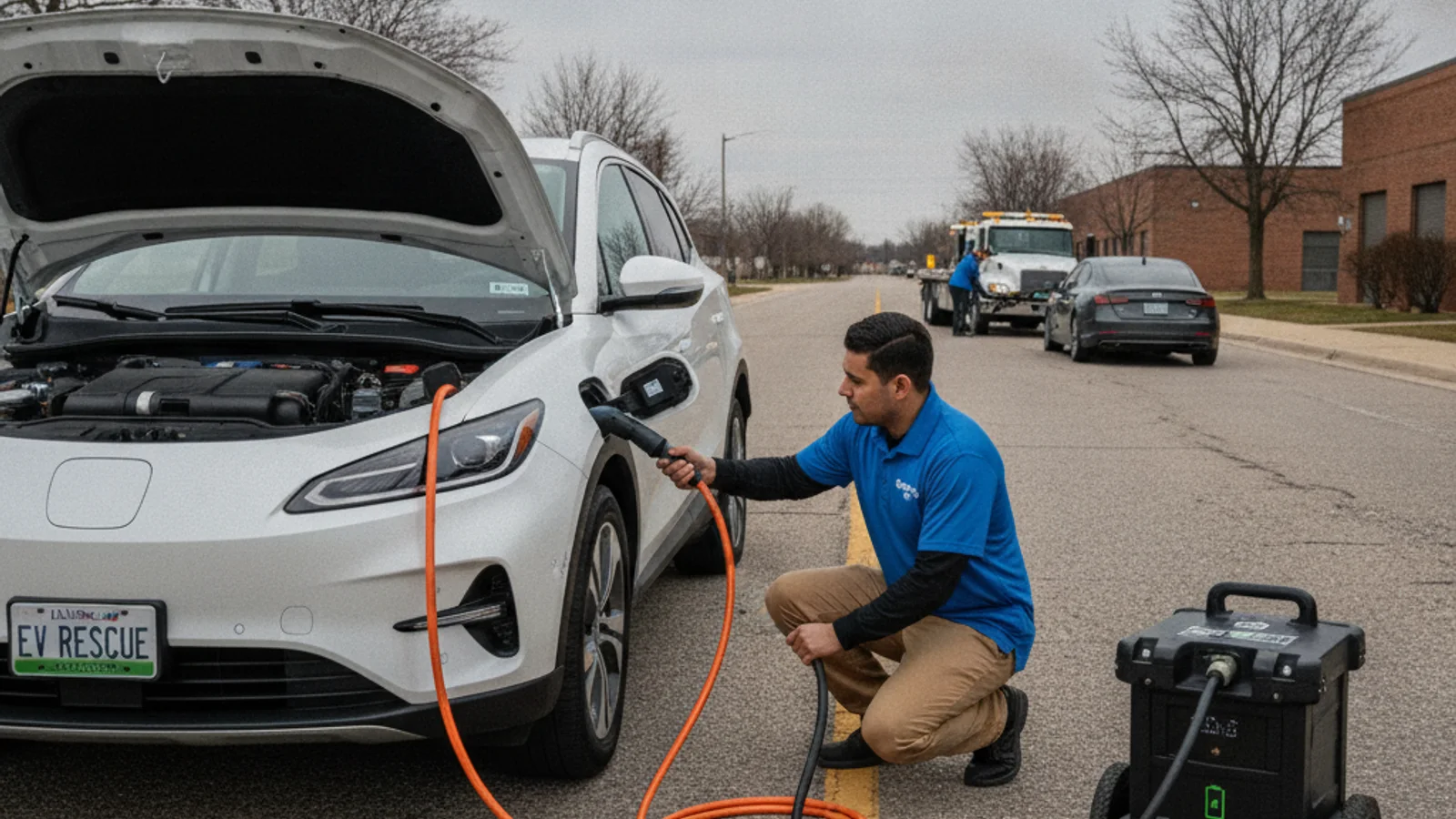
What a mobile EV boost actually delivers
The truck is a service van with a 240V Level 2 source. It brings energy to your car at the curb. Typical added range is about 10 to 20 miles. Typical charging time is 15 to 30 minutes. That clock is plug time, not a clock about when the truck arrives.
The truck isn’t a DC fast charger. It doesn’t deliver 150 kW or 250 kW. It delivers the same Level 2 power your home wall box delivers. The car sips. You get a bridge, not a full fill. The bridge gets you home, gets you to a charger, or gets you out of a lot.
A typical mobile booster puts out between 6 kW and 19 kW depending on the truck and the cable. At that power, the car adds about 10 to 20 miles of range in 15 to 30 minutes. Cold weather starts you lower, but the truck still adds the same energy.
What a tow actually delivers
A tow moves the car. It doesn’t add energy. After the tow, you still need a charger. The car still won’t drive without that charger. The tow’s flatbed doesn’t add range. The mobile charger does.
Many EVs also need a flatbed so the drive units don’t drag. A wrong tow can damage the motor mounts or the underbody. The tow itself is the job. The charger is a separate job that follows.
A tow makes sense when the car has a real mechanical issue, a damaged wheel, or a software lockout that blocks a charge. None of those are what a cold morning usually looks like. The morning car is a 12V that won’t close the contactors.
When the mobile boost is the right choice
The right cases all look the same from outside. The car won’t roll. The dash is dark or showing zero. You need a sip of energy, not a full fill.
Empty pack in a parking lot is the cleanest case. You’re at the mall, the office, or a friend’s curb. You walked away from a full day and the pack wasn’t enough. The truck comes to the car. You don’t move the car.
12V no-start is a different case that often travels with the empty pack. The operator can jump the 12V on the same visit. That wakes the car so the boost can flow. A 12V-only stall doesn’t need a 240V boost. It needs the small battery handled.
Long-dwell parking after a gig, a shift, or a meeting is another common case. The car sat too long. Cabin climate and battery thermal management ate the pack. The truck adds what you need.
A low pack near a working charger is a great case. The boost gets you to the next plug. You finish the charge at a public stall. The tow would still leave you empty at the destination.
When the tow is the right choice
Towing makes sense when the car has a real mechanical issue. A damaged wheel, a broken axle, or a software lockout that blocks a charge all need a flatbed. The mobile charger won’t fix those.
A tow makes sense when the operator can’t reach the car. A live lane with no shoulder is unsafe for a boost. The truck needs a legal place to sit. If you can creep to a shoulder or lot, do that first. If you can’t, the tow is safer than a live-lane boost.
A tow makes sense when the car is on fire. Step away. Call 911. The tow handles the rest after the fire is out.
A tow makes sense when the pack has a confirmed fault. A flooded pack, a damaged inverter, or a sensor that says “do not charge” is a tow job, not a boost. The operator reads the fault on the call.
How to read the quotes you get
The mobile operator quotes before they start. They bill you directly. If you don’t like the quote, you don’t have to take the job. The tow operator quotes the same way. Compare the two on what they actually deliver.
A mobile boost that adds 10 to 20 miles is a bridge. The miles get you home, to a charger, or out of a lot. The cost covers the truck, the fuel, and the operator’s time. The clock starts when the operator takes the job.
A tow that moves the car costs the tow itself plus whatever charge you need at the destination. The destination charge is on top. The cost of the tow covers the flatbed, the driver, and the time on the road. The clock starts the same way.
We don’t publish prices. We don’t promise an arrival window. The operators we connect you with quote on the call. Get the quote for each option. Pick the one that solves the problem you’re in.
What to do when you have both quotes
Tell both operators what the car is doing. Pack still shows miles, screens dark is a 12V. Pack at zero is a boost. Tell them make, model, and year. Tell them where you are, including the nearest cross street and the city. A street name plus a landmark beats a vibe.
Get the mobile operator’s quote first. Get the tow operator’s quote second. Compare them on what they actually deliver. A boost at the curb solves most stalls. A tow solves stalls the boost can’t reach.
If the boost quote is high because the truck is far, ask about a wait. If the tow quote is low because the truck is close, that may be the right call. Read the quote. Don’t pick on price alone.
What to do before you call anyone
Get the car out of traffic if it will still roll. Hazards on. Stay belted unless you’re in danger. Pin the map. Add the nearest cross street and the city.
Read the dash or the app. A dark screen with a pack that still shows miles is a 12V. A dead display with zero range is a pack. Take a photo if you can. That tells the operator which kit to bring.
Stay with the car unless you need to get out for safety. Don’t keep stabbing the start button. A weak 12V gets weaker with every press.
Frequently asked questions
Does a mobile boost always cost less than a tow?
Not always. We don’t publish prices. The operator quotes on the call. Compare the two on what they deliver. A boost at the curb solves most stalls. A tow solves stalls the boost can’t reach.
How much range does a mobile EV boost actually add?
Typical added range is about 10 to 20 miles. Typical charging time is 15 to 30 minutes. The truck delivers Level 2 power, the same as a home wall box. The clock is plug time. It isn’t a clock about when the truck arrives.
Can I tow an EV to a charger instead of getting a boost?
You can, but it doesn’t add energy. After the tow, you still need a charger. The car still won’t drive without that charger. A boost at the curb adds the energy to drive it. That saves the tow cost and the underbody damage.
What if both quotes are too high?
You can wait. You can ask about a discount. You can ask about a different operator. The pros we send quote before they start. They bill you directly. If you don’t like the quote, you don’t have to take the job.
When you need the match, call Charge Pro CHI at (858) 925-5546. An independent operator quotes the work. You decide. They bill you directly.