A Model S that won’t start in a Chicagoland winter is almost always a flat 12-volt battery. The traction pack under the floor is what moves the car. The 12V wakes every computer, latch, screen, and contactor. When that small battery flattens, the car looks bricked. The big pack can still be full.
Why an older Model S 12V takes a beating here
Older Model S 12V batteries use lead-acid chemistry. Lead-acid loses punch in the cold. January average high here is 31.6F. Average low is 18.8F. Annual snowfall is 38.4 inches. Those NOAA and NWS Chicago numbers are 1991 to 2020 normals. A January cold snap drives that loss harder.
January 2024 dipped to about -10F at O’Hare on the 14th and 15th. A Model S that started fine in October struggles to wake in January. Sentry Mode and the cabin climate controls keep drawing from the small battery overnight. By morning, the 12V can’t run the wake cycle.
January 2019 was worse. The polar vortex dropped O’Hare to -23F on January 30. Chicago stayed below zero for 52 straight hours. Lead-acid batteries failed in that cold. Lithium 12V packs fail for different reasons but show the same warning.
Tell a dark Model S from a low pack
Run this check before you book anything.
- Black screen, no app response, handles won’t present: 12V.
- Dim cabin lights or flickering lamps: still the 12V.
- Doors work and the display warns about range: traction pack.
- Car wakes, then dies again right away: 12V that needs replacement.
When the traction pack is empty, the car still talks. When the 12V is gone, the car looks asleep.
Where the Model S 12V posts sit
On older Model S cars before the 2021 refresh, the 12V lives in the frunk. Lift the floor mat and pull the foam insert. Terminals are labeled, so clip red to positive first. Use a chassis ground for black when you can.
On refreshed Model S from 2021 on, Tesla moved the jump posts. Look for a red positive post behind a small cover. It’s on the driver’s side of the frunk, near the firewall. The chassis ground is on that same side.
If the frunk won’t open because the 12V is dead, the car gives you an alternative. There are manual release loops in the front wheel wells. Pull once for the primary latch, then again for the secondary.
Tesla has moved those loops across years. If what you see doesn’t match, stop yanking. Search your year on Tesla support, or open the manual on your phone.
The U.S. Department of Energy has a plain overview of how electric vehicles work. It describes this split without naming one brand.
What a local operator does for the 12V
The operators we connect you with jump or replace a dead 12V on site. They confirm the model, the year, and the chemistry before they touch anything. Older Model S uses lead-acid. Newer ones may use lithium. A wrong clamp can damage body modules.
A jump wakes the car. It doesn’t rebuild a battery at the end of its life. If the Model S goes dark again the next morning, that’s a replacement talk with the operator, not a third jump.
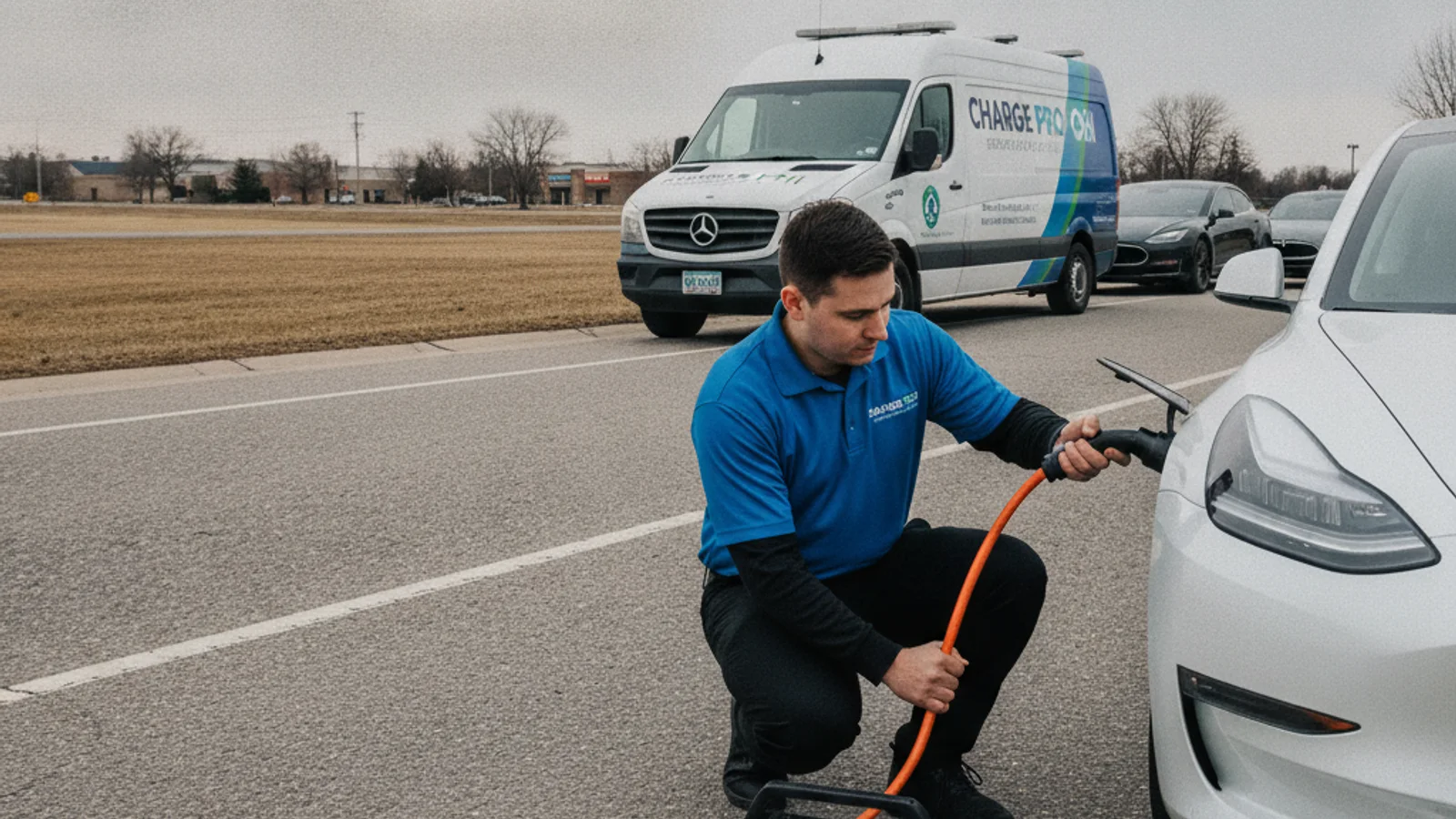
Independent operators we send also bring a 240-volt Level 2 source when the traction pack is the problem. Tesla gets a native NACS plug. That typically adds 10 to 20 miles of range in 15 to 30 minutes of charging. That’s charging time, never an arrival promise.
How to keep a Model S 12V alive through the winter
Turn off cabin overheat and Sentry Mode before you park. Both draw from the 12V while the car sleeps. A weak 12V can’t carry that load through a cold night.
Plug in if you have home charging. The DC-DC converter will top the 12V from the traction pack while the car is plugged in. A car that sits unplugged for a week on the street is the warning’s typical setup.
If the Model S is more than four years old, ask the operator to test the 12V during the next service. Lead-acid batteries give clearer warnings than lithium before they fail.
How we connect you with help
Charge Pro CHI connects Chicagoland drivers with independent local operators. We don’t own trucks. We don’t hold a trade license. We don’t employ technicians. We don’t set prices, and we don’t promise when someone arrives. The operator quotes you before starting and bills you directly.
We serve 49 cities and communities across 8 regions. That includes Chicago, Evanston, Naperville, Schaumburg, Joliet, Aurora, Waukegan, and the other cities on this network.
When to make the call
Call when the Model S is dark and the last range reading looked fine. Call when the car wakes, then dies again right away.
Call Charge Pro CHI at (858) 925-5546. We’ll match you with a local operator who handles Tesla and every major EV brand. They quote before they start.