EV roadside assistance in Glenview is a 240V boost at the bumper. It can also be a 12V jump when the car won’t wake. Most homes here can charge overnight. That still doesn’t cancel an Edens commute. It doesn’t cancel a long sit at The Glen Town Center either.
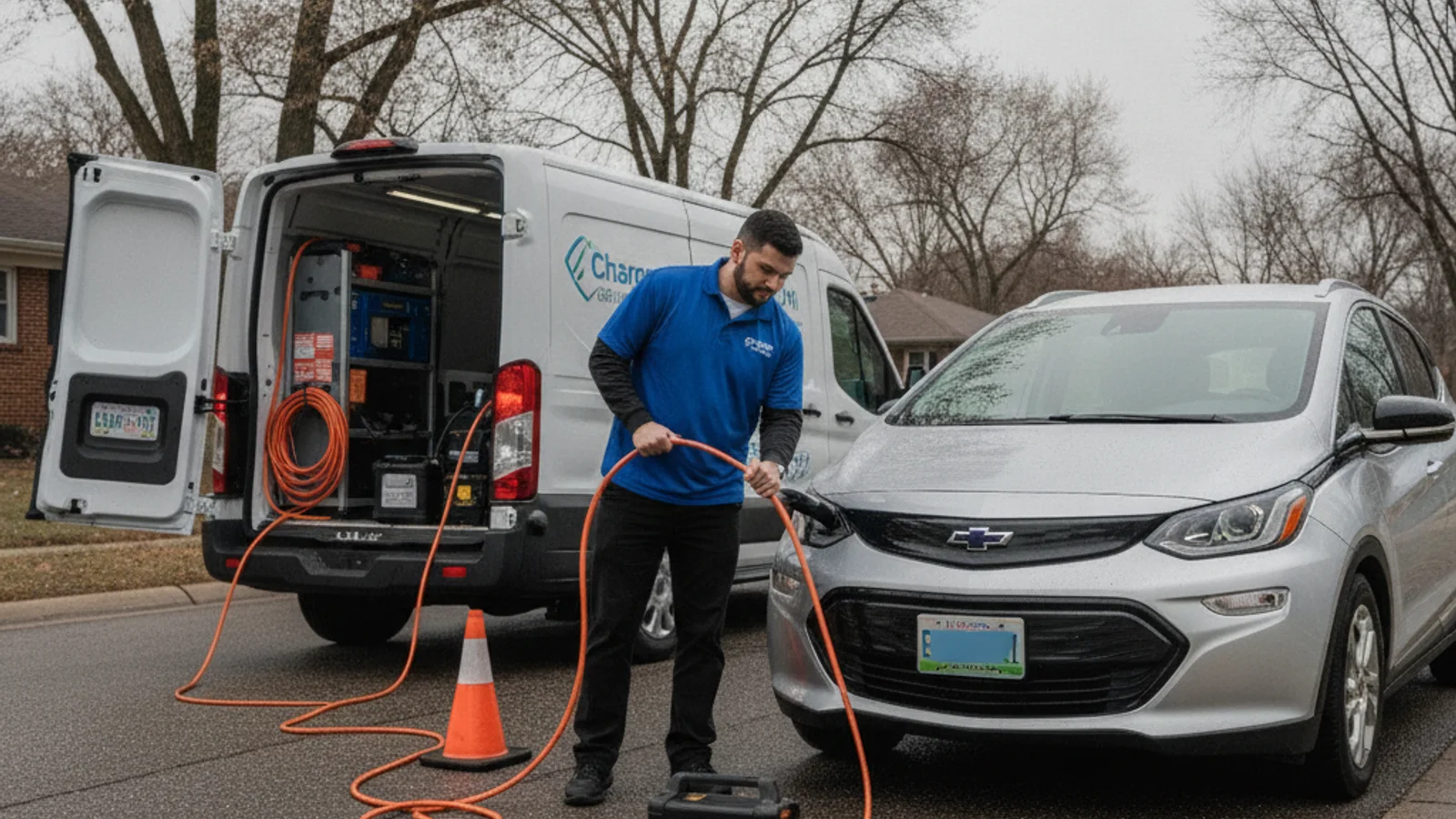
Home charging is the weekday plan here
Glenview sits in Cook County on the inner North Shore. The village covers 14.469 square miles. ACS 2019-2023 counted 47,682 residents. The 2024 Census estimate is 47,634. It’s a high-income Cook County suburb. Commonwealth Edison is the electric utility. Overlapping ZIP codes include 60016, 60025, 60026, 60062, and 60093.
This is newer suburban housing by North Shore standards. ACS puts 40.3% of Glenview homes before 1980. Wilmette sits at 74.3% pre-1980. Park Ridge is 67.1%, and Evanston is 71.2%. Northbrook, next door, is 39.1%. Cicero, by contrast, is 90.2% pre-1980. That newer stock is why a wall box is a common garage upgrade here.
The weekday plan is simple. The car sleeps on 240 volts. You leave downtown Glenview, east Glenview, or west Glenview with a full pack. Charge Pro CHI doesn’t wire that garage. We don’t sell wall boxes or pull village permits. We’re a referral line for when the car is already stuck.
A forgotten plug-in still happens in a house that can charge. So does a longer day than the buffer you left. Home charging is the default. It isn’t a shield against a stall on I-94.
If the wall box went dark in a ComEd outage, that’s a different job. Glenview power outages: home backup compared with EV rescue covers that split.
Why the Edens and The Glen still strand cars
Stalls here cluster in two places. One is the Edens interchange. The other is The Glen Town Center. That’s the retail core on the old Glenview Naval Air Station land. Neither is a home-charging failure. Both are dwell and commute drains.
I-94, the Edens Expressway, cuts the east side of town. Cabin heat and stop-and-go spend pack miles. A buffer that looked fine in the driveway can vanish in that crawl. Getting stuck on a freeway shoulder is a safety problem. Stay out of the travel lanes. Keep hazards on. Wait with the car in a legal spot.
The Glen Town Center is the other cluster. People leave cars in those lots for shopping, food, and errands. Cabin climate keeps running while you sit. A thin afternoon pack can hit zero in that lot. Kohl Children’s Museum sits in the same local map. The Metra Milwaukee District North line runs through town. Name the lot or the platform when you call. Don’t spend the last miles hunting a plug you haven’t confirmed.
This page doesn’t list public chargers by name. Pins move, and units go down without notice. If you already know a working plug, go there. Only go if you can actually reach it. If the car is already done, EV roadside assistance comes to that bumper.
Willow Road, Lake Avenue, and the Metra line
Willow Road and Lake Avenue feed a lot of North Shore commuting. Waukegan Road and Milwaukee Avenue do the same on the surface grid. The drain is timed lights, retail curb cuts, and winter slush. You can burn the last miles between The Glen and a west Glenview driveway. You never have to touch the Edens for that.
Downtown Glenview is a short grid with the Metra stop in the mix. East Glenview sits closer to the Edens. West Glenview is the longer surface run. The Glen is its own retail and housing pocket. Tell the operator which of those you mean. A pin beats a vague village-only description.
Northbrook, Wilmette, Des Plaines, and Park Ridge sit on the edges. A Willow Road trip can cross a village line before you notice. Northbrook sits right on that north edge.
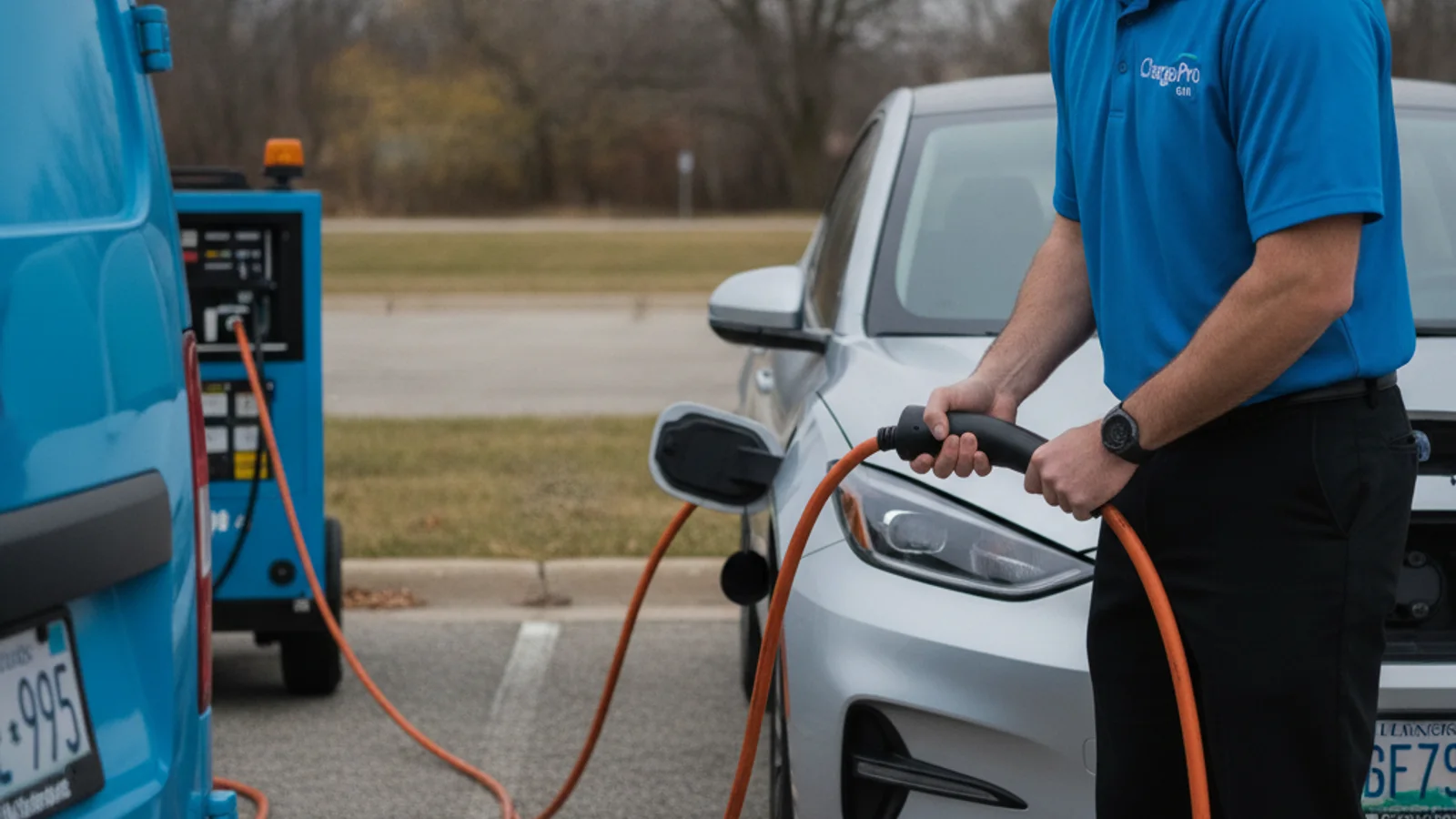
Winter 12V deaths on streets that already plug in
Two failures look the same from the sidewalk. The traction pack can sit at zero. The small 12V battery can also be dead. You can’t tell from a dark window alone.
The pack is what moves the car. When it’s empty, the charge port needs energy. The operator’s 240V source then feeds that port. That’s mobile EV charging, a Level 2 boost at the bumper.
The 12V runs locks, computers, and the charge-port latch. It also closes the high-voltage contactors. If it dies, the car won’t wake even with miles in the pack. Cold weather is hard on that small battery. Glenview winters still produce that failure on streets with wall boxes at home. The garage charger doesn’t keep the 12V healthy by itself.
Don’t let a neighbor jump it like a gas sedan. Access points differ by brand. Sequencing differs too. Operators in the network jump or replace that 12V on site. Read What happens when an EV’s 12-volt battery dies in the cold.
Ask for a 12V check first if the cabin is dark. If the dash still shows falling miles, you’re in pack territory. Describe both. Let the operator sort the failure.
Cabin heat on a January Edens run spends more than the same miles in July. You can still leave a full pack in the morning. You can still stall after a Town Center dwell plus that crawl home. The wall box is waiting in the garage. It can’t help a car that never reaches the driveway.
What the operator brings to the bumper
Charge Pro CHI is a referral line, not a shop. We match stranded EV drivers with independent local operators. We don’t own trucks, run a yard, or keep parts. We don’t employ technicians. We don’t set prices or publish business hours. We don’t promise an arrival time. Not from this page, and not from the phone line.
The operator quotes you before any cable goes on. They bill you directly. If the quote isn’t right, you decline. Distance, time of day, and the range you need all move that figure. No verified public fee for this visit appears on this page. Confirm the number they give you before they start.
The operator brings a 240V Level 2 source to the car. Teslas take a native NACS plug. Other brands use a CCS or J1772 adapter. A typical session adds roughly 10 to 20 miles of range. That’s 15 to 30 minutes of charging time. It isn’t a promise about when anyone arrives. It’s enough to leave the shoulder. It also covers a Town Center lot or a Willow Road curb.
They handle Tesla and every major EV brand. The pros we connect you with are licensed and insured. A gas-car jump pack from a passerby is the wrong tool. Let the operator run their own sequence on site.
A boost versus a flatbed on I-94
A tow is the old default for a dead car. For most EVs here, a boost is the cleaner first move. Many electric vehicles are all-wheel drive. Those motors can be damaged if the wheels roll on a hook-and-chain tow. You need a flatbed. You still have a dead pack at the other end.
A mobile charge skips that move. The energy comes to you. You stay on your original route once the car wakes. You don’t ride a flatbed to a shop you didn’t pick. Read The hidden costs of towing a dead EV in Chicagoland.
If a wrecker is already on the way, say that when you book the boost. The operator still quotes you before they start. Stay with the car. Don’t creep the last mile toward Milwaukee Avenue on hope. Empty packs don’t recover on coasting.
Northbrook, Wilmette, and this North Shore edge
Glenview isn’t Wilmette’s older housing, and it isn’t a downtown Chicago stall. Home charging is common. The rescue profile is still the commute and the retail dwell. Winter 12V deaths sit on top of that. That’s the North Shore pattern this village actually produces.
EV ownership in Northbrook: home charging, range, and rescue covers that suburb. Wilmette, Des Plaines, and Park Ridge share the surface grid. The Glenview EV charging page is the hub for this village. Service covers the rest of Chicagoland from this same line.
What to say when you call
Start with Glenview, then name the spot. Use the Edens interchange or The Glen Town Center if that’s where you are. Willow Road, Lake Avenue, Waukegan Road, or Milwaukee Avenue will do on the surface. Add downtown, east Glenview, west Glenview, or The Glen if you’re on a side street. Kohl Children’s Museum and the Metra Milwaukee District North stop are landmarks operators can use. Add the make, the model, and whether the dash is lit. Say whether the charge port will open.
Keep hazards on if you’re on I-94 or a busy arterial. Stay in the car if traffic is close. A Town Center stall is calmer than a freeway shoulder. Match how you wait to the road you’re on.
Don’t pop the hood and guess at clamps. Don’t spend the last miles hunting a charger you haven’t confirmed. Park, call, and wait with the car.
If the EV is dead in Glenview, stay with the car. A local operator can bring Level 2 power to that curb. They can also sort a 12V failure. Charge Pro CHI only makes the match.
Call (858) 925-5546 when you want that referral. The operator quotes you first, then they charge or jump on site.