Geico roadside dispatches a jump or a tow. An empty pack here still needs a 240V boost, which is what a local independent operator brings. Knowing the split saves a second call and the wait between them.
What Geico roadside covers
Geico sells emergency roadside assistance as an add-on to its auto policies. Coverage includes a set number of service calls per year. The dispatch network is national. The trucks and contractors are local. The network handles flatbed tows, 12V jumps, tire changes, fuel delivery, and lockout help.
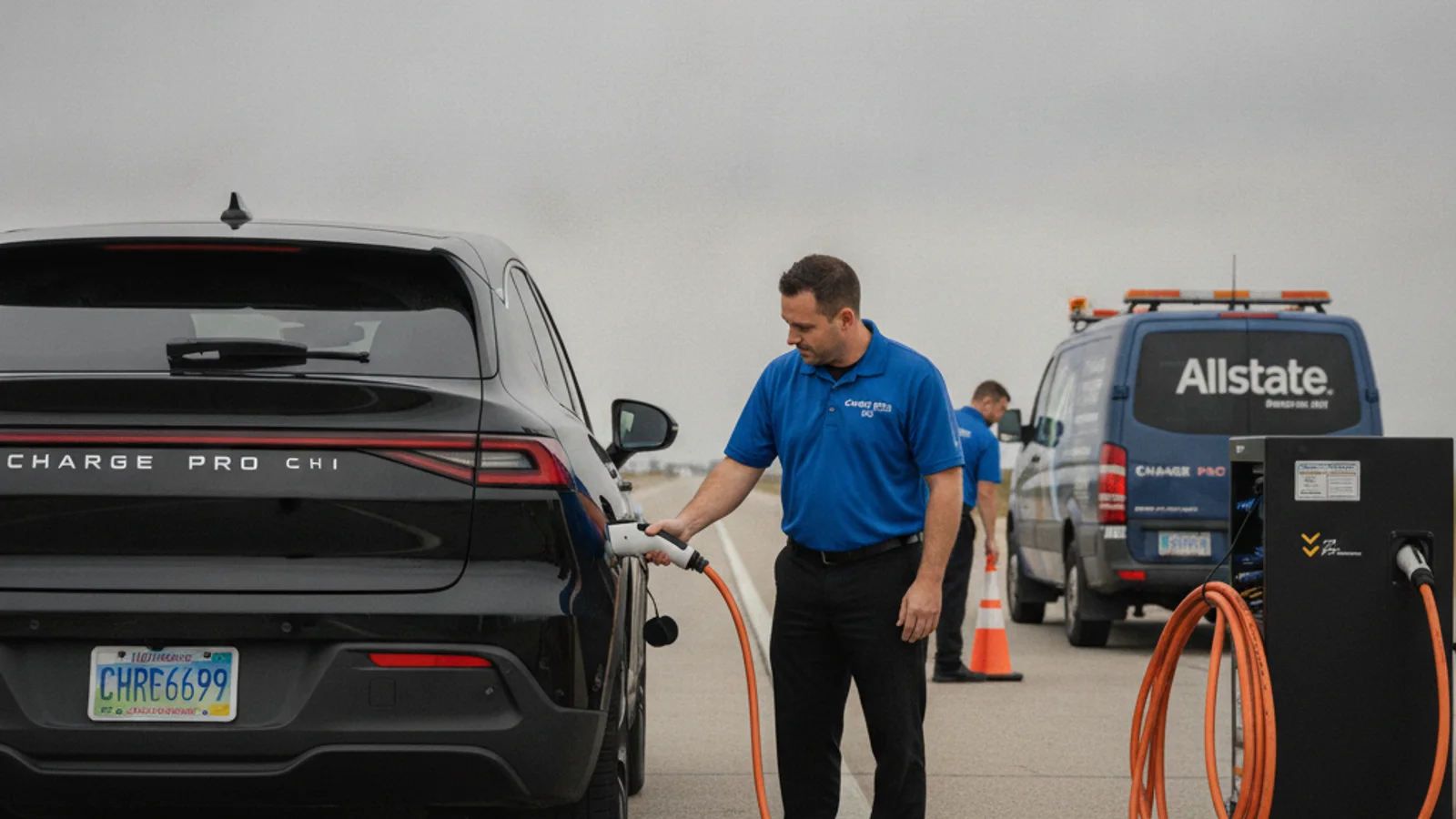
For an EV, the same network applies. A dead 12V gets a jump. A flat tire gets a swap or a tow. An empty pack gets a flatbed to a charger. None of those trucks bring a mobile Level 2 charger.
Why Geico’s network still matters for some EV calls
The jump is the most useful. A Model 3 in Berwyn parked on a street in January wakes up after a 12V jump. The driver gets in, drives to a charger, plugs in. The Geico contractor did the wake-up. The driver took it from there.
The flatbed also works for some cases. A Model Y on the Eisenhower with a sidewall tire gash and no spare is a tow. The contractor tows to a Tesla-rated tire shop. A Model S in a downtown garage with a dead 12V that won’t take a jump is a tow to a Tesla shop. The driver doesn’t need a boost, just a flat ride.
Why Geico’s network doesn’t fill the empty-pack gap
An empty pack is the gap. The contractor doesn’t bring a Level 2 source. They flatbed the car to a charger, and the driver is still stranded without a ride. The original goal was to keep driving, not to relocate the car.
A driver on the Bishop Ford or the Dan Ryan who hits zero is in this gap. The Geico contractor can tow. The driver wants a boost. The local operator we connect you with brings a 240V Level 2 truck. They typically add 10 to 20 miles in 15 to 30 minutes of charging. That is charging time, never an arrival promise.
How Geico’s coverage works for an EV tow
Geico’s roadside includes a set tow distance. Past that distance the driver pays per mile. The contractor chooses the destination. A driver who wants a Tesla-rated shop should ask for one when they call in. The contractor may not know which shops are rated.
Geico also has a separate lockout policy. An EV with a dead 12V and locked doors can be a lockout as much as a jump. The contractor decides which to bill. A Model Y with a frozen charge port and locked handles can read as both.
How Geico’s coverage handles a Tesla 12V
A Tesla 12V is in the frunk on most models, with a bumper post on Model 3 and Model Y for a jump with the hood shut. Geico’s contractor may or may not know that. Some contractors try to pop a regular hood on a Model 3 and end up damaging the trim.
Tell the contractor the bumper post on a Model 3 and Y. Tell them to use the frunk posts on a Model S or X. If they refuse to jump, ask for a flatbed to a Tesla-rated shop. If they will jump, watch the order. Red first, then black to ground. Pull black first, then red once the screen is up.
When to use Geico and when to call us
Use Geico when the car needs a jump, a tow, a tire swap, or fuel. The coverage is included and the network is broad. Use a local mobile rescue operator when the pack is empty and the car still wakes. That is the gap in every roadside plan we’ve seen.
Charge Pro CHI is a referral line. We match Geico members and non-members with independent local mobile rescue operators. Those pros bring 240V Level 2 trucks with NACS, CCS, and J1772 adapters. They quote before starting and bill the driver directly. We don’t set prices. We don’t promise when someone arrives.
What to have ready when you call
Have your location, model, and what the car is doing ready. Black screen or alive screen. Pack at zero or 12V dead. Frozen port or open port. Boost or tow. The operator can quote faster when they know what’s needed before they roll.
For a wider owner checklist, see our EV roadside assistance guide. The split between Geico and a local boost is the same as for AAA, USAA, or any other insurer dispatch.
When to call Charge Pro CHI
If your EV is on the road with an empty pack and Geico’s network can’t bring a charger, call. Driveway, street, garage, or shoulder, the operators we match do this work. Call (858) 925-5546 and we’ll match you with a local operator.