Lake Michigan wind on Sheridan Road can cut your EV range fast. If you stall on the Highland Park lakefront, stay visible. Call for a local mobile boost instead of guessing your way west.
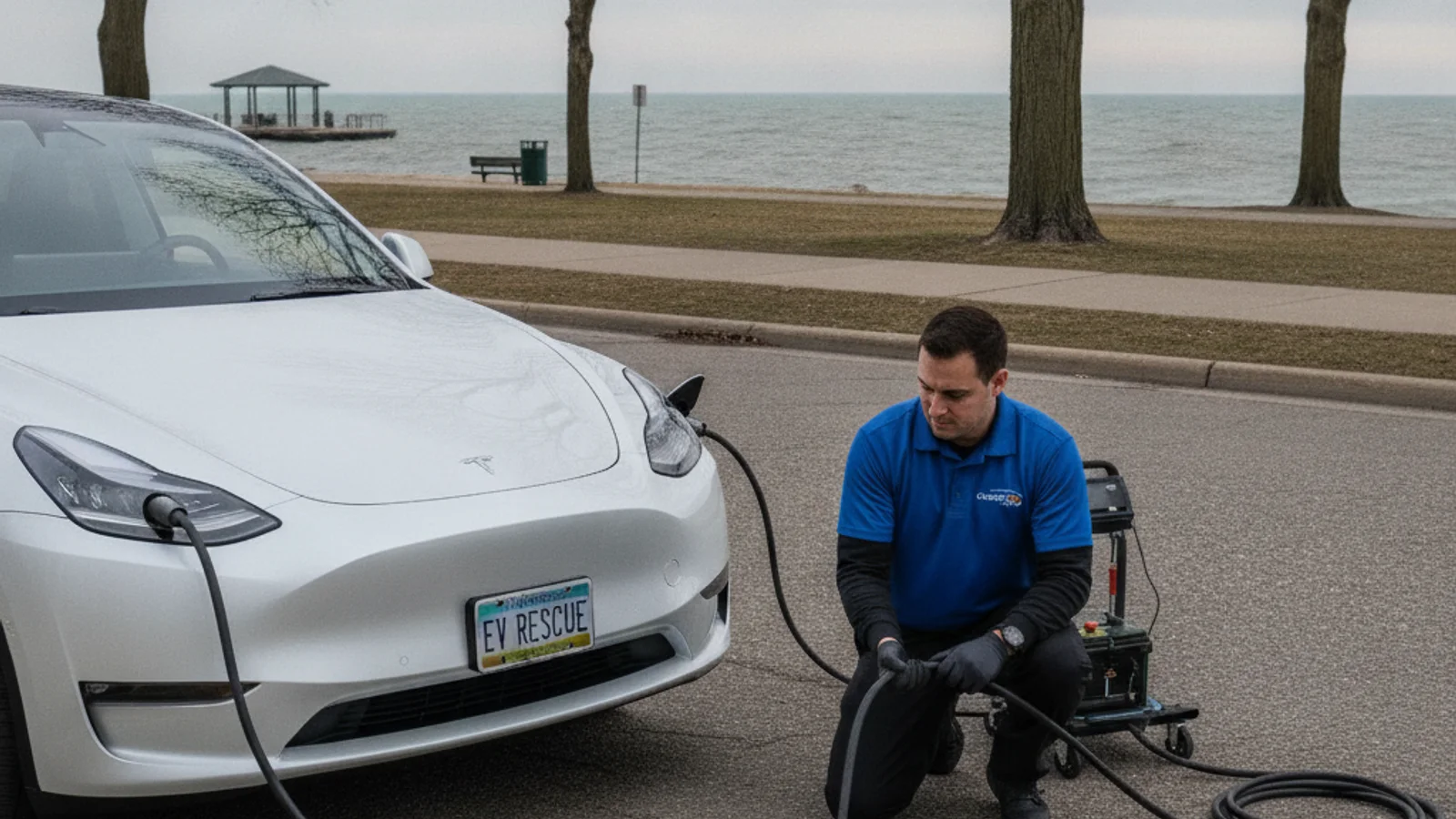
Why lake wind cuts range on this drive
Highland Park covers a little over 12 square miles in Lake County. The 2024 population estimate for the city is 30,794. East Highland Park meets the bluffs and beaches. Sheridan Road follows that edge along the water. A Lake Michigan headwind makes the car work harder than a still inland block.
Cabin heat in winter adds a real extra load. Air conditioning adds its own load in summer. A slow search for parking adds even more drain. You left home thinking the pack had room. Then a lakefront loop spent more than you planned. That’s a Sheridan problem, not a character flaw.
Most owners in this city charge at home. ComEd is the electric utility for Highland Park. High EV use plus home charging is the local pattern. The rescue calls tend to be dwell, then the drive home. A beach sit, a downtown dinner, or a Ravinia night all fit.
The bluffs matter as soon as you turn inland. Parking by the water sits down the grade. A lot of homes sit farther up the bluff. An estimate that looked fine on the flat can shrink on the grade. Winter makes that climb feel a lot worse. Lake wind here is severe in the cold months.
You don’t need to guess your way west on a sliver of range. You need a buffer, and a plan if it’s gone. Keep the hazard lights on as soon as you feel it. Get out of the travel lane if you can. Then figure out whether the pack is empty or the 12-volt died.
Three local ways this stall happens
After a long night at Ravinia
Ravinia Festival is the stall pattern this town already knows. You park there for a long summer concert. You walk back to the lot after dark. The car is quieter than you left it. Sometimes the car won’t wake up at all. Sometimes the pack is just lower than you thought.
Then you still have to drive the car home. Grade, wind, and cabin climate are all waiting. West Highland Park sits toward US-41, the Skokie Highway, and I-94. That inland run looks short on a phone map. It isn’t free if the pack is already near empty.
The Metra Union Pacific North line serves Ravinia and downtown. A concert night can mean hours in a lot. A sitting EV can kill the 12-volt with range still in the pack. That’s a jump or a replacement, not a hunt for a plug.
On a Sheridan Road lakefront loop
Sheridan is the scenic crawl along the water. You roll past the beaches and wait on pedestrians. You idle there with the climate still on. The display ticks down in small bites you don’t feel. Then the low-range warning hits with the lake still in the window.
East Highland Park doesn’t give you a wide freeway shoulder. You’re on a local through-street with bikes, parked cars, and tight gaps. If power is fading, take the first side street you can still reach. A quiet block is safer than dying in the lane.
Don’t try to just make Green Bay Road on a prayer. Green Bay Road is inland, and it’s still more driving. Clavey Road and Half Day Road, Illinois Route 22, cut west too. They’re useful once you actually have range again. Those roads aren’t a source of new range.
Coming up from the beaches
The last trap on this drive is the grade. You parked down by the water because that’s where the day was. Home, downtown, or US-41 sits up the bluff. A car with a few miles left on the sand may not like that climb. That climb is simple physics, not a mystery.
If you still have a little motion, use it to get off the slope. Get out of traffic while the car can still roll. Don’t spend the last energy on a longer scenic loop. Point toward a safe stop, then book the boost.
Nearby Highwood, Deerfield, Northbrook, and Lake Forest share this lake air. That wind doesn’t stop at the city line. Drivers coming up Sheridan from a Wilmette lakefront stall feel the same cut. For the in-town stall pattern, read mobile EV charging when Highland Park drivers stall.
Empty pack or a 12-volt that won’t wake
Two failures can look alike from the sidewalk. They aren’t the same job for the operator.
An empty traction pack means you drove until the car couldn’t. Cabin lights may still work for a bit. You won’t add driving miles without a charge. A mobile operator brings a 240-volt Level 2 source to the car. Teslas take a native NACS plug from the operator. Other EVs use a CCS or J1772 adapter. A typical session adds 10 to 20 miles of range. That’s 15 to 30 minutes of charging time. That charging window isn’t an arrival time at all.
A dead 12-volt is the no-start, no-unlock, blank-screen problem. The big pack can still hold plenty of energy. The car just can’t use any of that energy. Operators we connect you with can jump or replace that 12-volt on site. They handle Tesla and every major EV brand.
Don’t keep cycling power just to test it. That cycling can flatten a weak 12-volt faster. Turn the hazards on if they still work. Then wait for the operator’s quote on site.
Cold cuts range across this metro, not only on Sheridan. See our guide to how long a Tesla charge lasts through a cold Chicagoland day. Highland Park’s lake edge is the windy cut of that same climate. The Highland Park city page covers the rest of town around this lakefront.
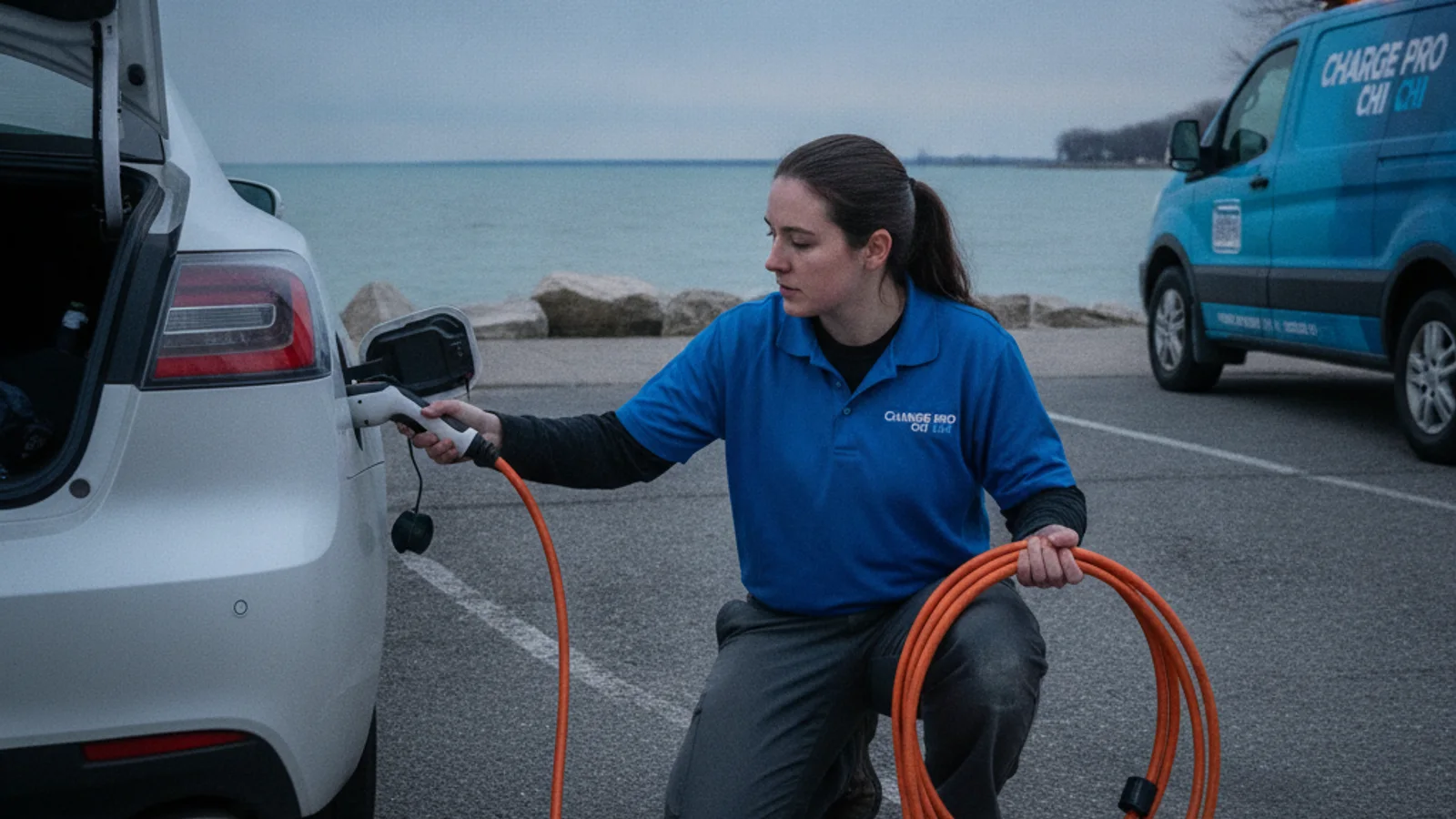
What to do in the first few minutes
Put the hazards on as soon as the car feels weak. Coast right as far as the pavement lets you. A side street in east Highland Park beats a live Sheridan lane. A lot you can still roll into beats the travel lane.
Stay with the car on a busy stretch. Standing in the travel lane helps nobody at all. If a patrol car stops, have a clear plan. Say you’re booking a mobile EV charge now. Say the operator quotes on site before they plug in. Saying you might coast to the next town isn’t a plan.
Charge Pro CHI doesn’t publish any arrival windows. We don’t run a fleet of rescue trucks. We match you with an independent local operator. That operator quotes before any cable goes in. They bill you directly for the rescue work.
Don’t invent a dash to US-41 on fumes. Don’t aim for the Tri-State because the road is bigger. A bigger road still doesn’t refill the pack. If you can’t move, stay put and bring the charge to you.
Mobile EV charging is the call for an empty pack. Out-of-charge recovery is the same idea when you’re already at zero. A Tesla 12-volt jump is the other fork. Tell the operator which one you think you have. They’ll confirm the actual fault while on site.
A mobile Level 2 boost versus a tow
A tow still has a place on this corridor. If you can’t be charged where you sit, you may need a flatbed. EVs generally need a flatbed so the drive units don’t spin.
A mobile Level 2 boost tries to leave you in your own car. You drive to your home charger, or to a public stall you already trust. We won’t name a stall we didn’t verify. Check your own apps for what’s actually open.
The operator’s job is a short, honest top-up. Ten to 20 miles is the typical add. That’s often enough to get off Sheridan and back to a garage in town. It can also cover the climb from the beaches toward west Highland Park. It isn’t a full recharge of the pack.
Non-Tesla owners should say the brand when they call. The operator brings NACS, plus CCS or J1772 adapters. Don’t assume a gas-station jump pack will wake a modern EV. The 12-volt battery may still accept a jump. The traction pack won’t take that kind of jump.
Charge Pro CHI doesn’t hold a trade license. We don’t own trucks, yards, or parts inventory. The pros we connect you with are licensed and insured. They do the actual work on your car. You get a quote from that operator first.
Keep a lakefront buffer next time
Once you can move, go home if home is close. This city is small enough that a modest add often covers it. Park the car and plug in on ComEd power. Let the pack recover overnight if you can. If the 12-volt was the failure, get that battery tested. A jump that dies again is a replacement talk, not another Sheridan loop.
Build a bigger buffer before the next lakefront cruise. Wind, climate control, and the bluff grade all stack. Ravinia nights need a buffer for the sit and the drive home. Downtown dinners need a buffer for circling the blocks.
If you commute in from Northbrook, treat the lake loop as extra load. If you’re heading toward Libertyville after the show, treat it the same. The display’s remaining miles are only an estimate. Lake wind isn’t built into every range estimate.
When to call from the Highland Park lakefront
Call when you can’t add miles on your own. Call when the car won’t wake up either. Call from Sheridan, a Ravinia lot, or a beach sit. Don’t wait until you’re blocking a lane to start the call.
Charge Pro CHI covers Chicagoland, and that includes Highland Park. We match stranded EV drivers with independent mobile rescue operators. They handle Tesla and every major EV brand.
Call (858) 925-5546 when you need that operator match. The operator quotes you before they start work. Then they bill you directly after the work.