Tesla roadside dispatches a contracted tow operator, not a 240V truck. That matters here when the pack is empty and you are still on a Lake Shore Drive shoulder. A local independent operator brings a Level 2 source, quotes you before starting, and bills you directly. That is the practical difference when your Model 3 or Model Y runs out of range.
What Tesla actually sends
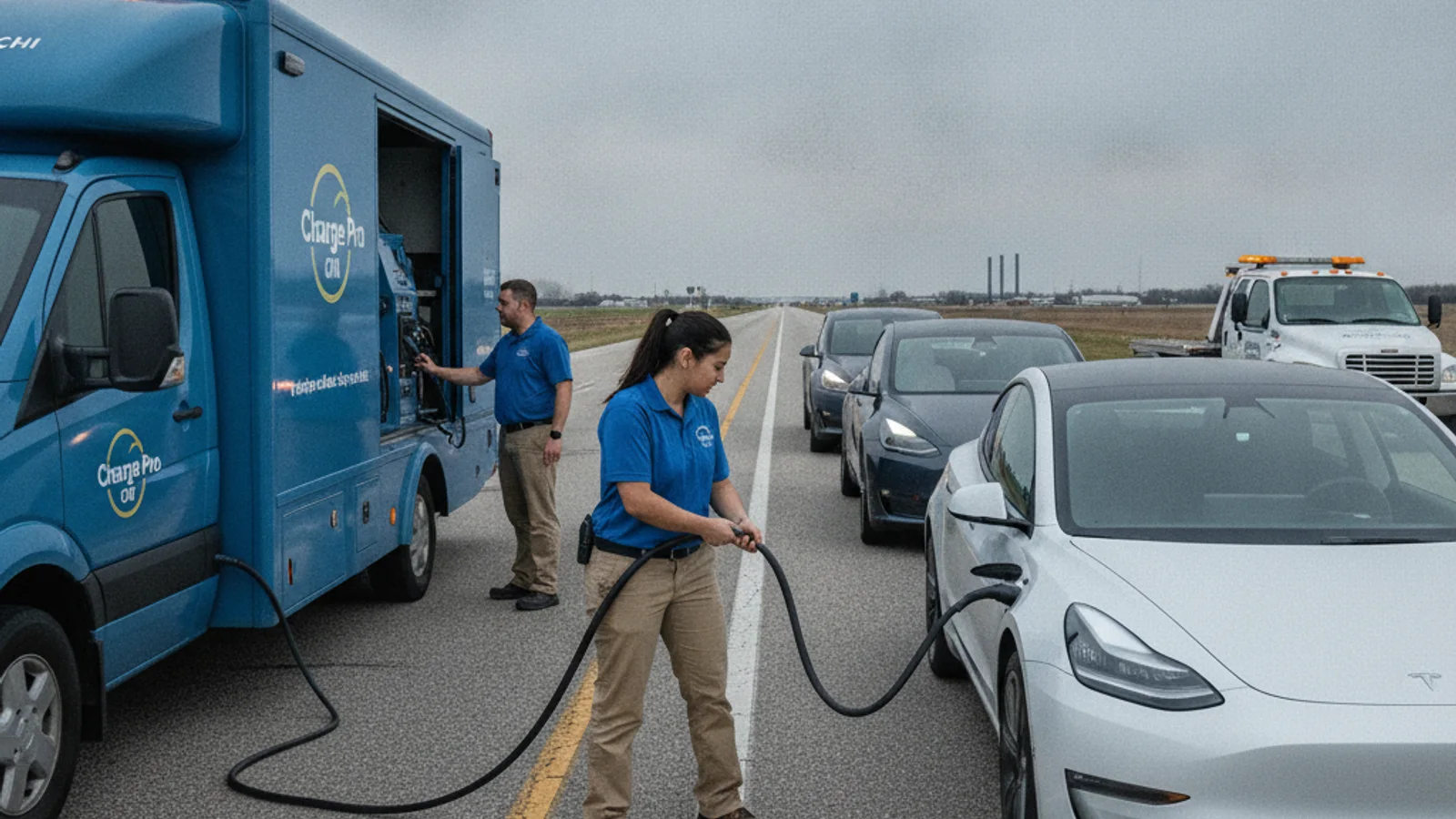
Tesla’s own roadside program is national. When you call from Chicago or Skokie, the dispatcher chooses from a network of contracted tow companies. Those contractors have flatbeds and dollies, not always a mobile Level 2 unit. A Model 3 or Y on empty doesn’t need a flatbed to a charger. It needs a 240V boost at the car. The contractor’s job, as written, is to move the car. A boost is a separate thing.
Contractors do get paid for the dispatch. That is part of Tesla’s network model. What they bring varies by region and by the time of day. A night call from the Dan Ryan is not the same as a weekday Oak Brook Supercharger stall. The plan covers the dispatch, but it doesn’t guarantee a mobile charge.
Why that contractor still matters for tire or 12V jobs
Tire and 12V jobs are different. The contractor can swap to a spare, plug in a jump pack, or lift the car onto a flatbed. Those are real saves. A dead 12V in a January cold on a street in Berwyn looks like a bricked Tesla until the screens wake up. A 12V jump is the right fix, and a contractor often handles it.
What a contractor does not have is a 240V charger on the truck. That’s not the typical setup. Tow trucks are sized for the cab, the bed, and the winch. Adding a Level 2 source changes the truck. Most national networks don’t standardize that.
Where the local operator fills the gap
If the pack is empty, a mobile Level 2 unit is what moves the needle. Operators in this metro run those trucks. They bring a NACS plug for Tesla, plus a CCS or J1772 adapter for the rest. They quote before they start. They bill you directly. The boost typically adds 10 to 20 miles of range. Plan on 15 to 30 minutes of charging. That is charging time, never an arrival time.
This is the part Tesla’s network doesn’t usually cover. Empty-pack calls don’t fit the contractor model. The truck is the same as for a tow. The equipment is different.
When a contractor is the right call
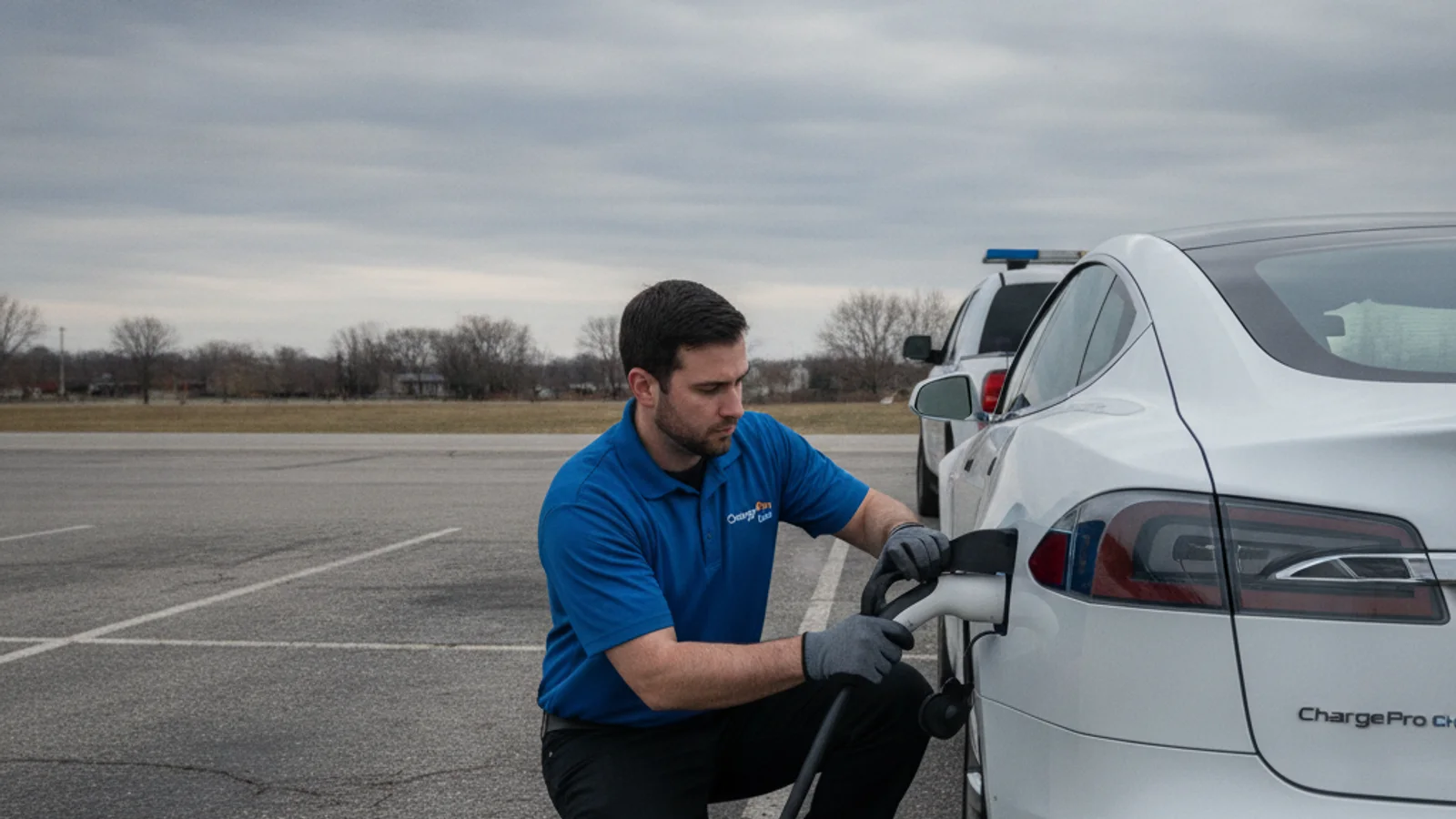
Use Tesla’s line when the car can’t move under its own power. A flat tire on the Tri-State, a wheel stuck in a Rosemont construction pothole, a 12V that’s too dead to take a charge. A contractor on a flatbed is the safest path. Loading a Tesla the wrong way can damage the battery floor.
For a 12V that’s gone flat, the contractor usually brings a portable jump pack. That wakes the computers. From there, drive to the nearest charger. A jump only buys wake-up, not miles.
When a local boost is the right call
Use a local mobile operator when the pack is empty and the car still wakes. That means the 12V is alive, the screen is up, and the dash says zero. A boost on site adds range. No tow. No flatbed. No second trip to a charger.
This is also the path when the car is parked on a tight street. Logan Square, Cicero, and Berwyn have older housing with no garage and narrow alleys. A flatbed can’t always get in. A small Level 2 truck can.
How Charge Pro CHI fits
Charge Pro CHI is a referral line, not a shop. We don’t own trucks, and we don’t charge cars. We match stranded Tesla drivers with independent local mobile rescue operators. Those pros quote you before they start and bill you directly. We don’t set prices, and we don’t promise when someone arrives.
If you are stuck on the Eisenhower or sitting in a Lakeview garage with zero miles, call the number below. The operator we connect you with brings the right tool for the job. Sometimes that means a jump. Sometimes that means a 240V boost. We don’t pick which, and we don’t pick when. The operator does.
What to have ready when you call
Have your location, model, and what the car is doing ready. Black screen or alive screen. Pack at zero or 12V dead. Frozen port or open port. Tow or boost. The operator can quote faster when they know what’s needed before they roll.
For a wide look at what each path covers, see our Tesla roadside walkthrough. If the miss is a flat pack on the Dan Ryan, the boost path is the same as for an Oak Brook Supercharger stall. The local operator fills the gap.
When to call Charge Pro CHI
If your Tesla is dead on the road or the pack is empty, call. We connect you with a local operator who brings the right tool. Driveway, street, garage, or shoulder, the operators we match do this work. Call (858) 925-5546 and we’ll match you with a local operator.