Tesla roadside assistance is included under the Basic Vehicle Limited Warranty for four years or 50,000 miles. After that, Tesla bills the dispatch, and we couldn’t confirm a 2026 fee we can print. Check Tesla’s current estimate in the app or on Tesla’s support site before you approve a tow. Tesla’s plan covers flats, lockouts, 12-volt help, and towing. It doesn’t replace a local Level 2 boost when the pack is empty.
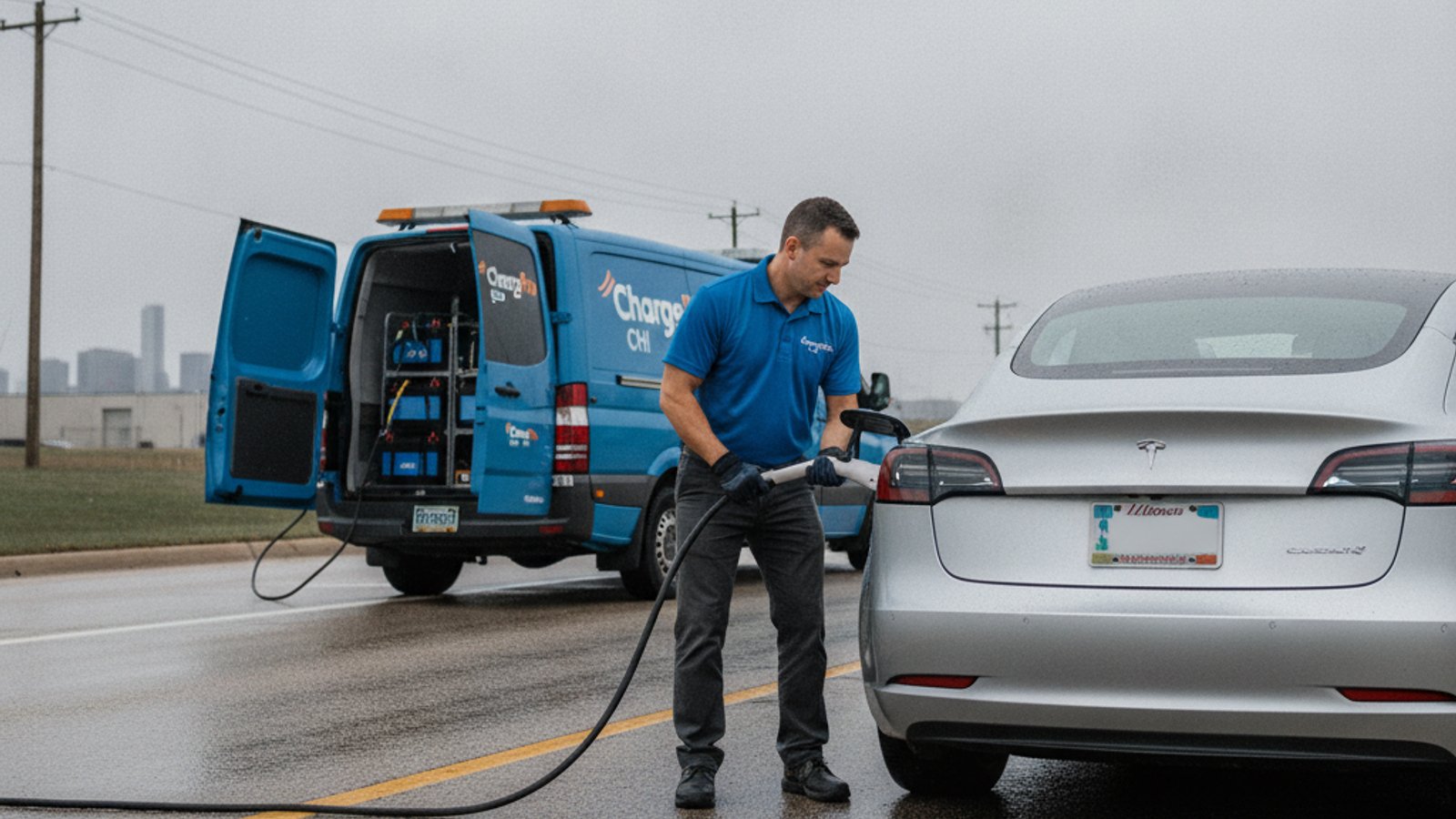
Tesla’s roadside plan isn’t a charger on wheels
People search how much is Tesla roadside assistance because they want a number. They also want the car charged where it sits. Tesla’s published roadside program is a warranty-tied safety net. It sends tire help, lockout help, a 12-volt jump, or a flatbed. An empty high-voltage pack is usually a tow to a Supercharger or a Tesla Service Center. Tesla generally doesn’t roll 240-volt power to your bumper.
Tesla’s support pages are the authority on what’s covered. Your model year and in-service date control the window. Read those terms in the Tesla app instead of treating a blog as your contract.
If you bought an Extended Service Agreement or a Certified Pre-Owned Tesla, roadside terms can run longer. We didn’t find one public fee table that covers every Illinois owner in 2026.
For how OEM help compares with a local pro, read Tesla roadside assistance versus a local operator here.
What the basic warranty window actually means
New Teslas typically include the Basic Vehicle Limited Warranty. Roadside help rides with it for four years or 50,000 miles, whichever comes first. Inside that window, Tesla shouldn’t invoice you for a covered roadside event. Outside it, Tesla treats the call as paid work. Crash damage, user error, and anything Tesla doesn’t class as a defect can sit outside coverage even while miles remain. Ask Tesla to confirm coverage before a truck is hooked.
A longer walkthrough of what’s free on Tesla roadside, and what it covers stays on that warranty question.
Two stalls that look alike and aren’t
From the curb, a silent Tesla is a silent Tesla. Under the skin, it’s either a 12-volt problem or an empty pack. The 12-volt battery wakes the screens, the locks, and the high-voltage contactors. If that small battery is dead, the car won’t start. Yesterday’s range on the display doesn’t matter. Tesla may send someone to jump or replace that 12-volt. The operators Charge Pro CHI connects you with also jump a Tesla 12-volt on site. They quote before they start, and they bill you directly.
An empty pack is the other stall. The car is awake, and range reads zero or close. Tesla’s usual answer is a flatbed. Tesla generally doesn’t offer mobile charging, which is why a local mobile EV charging call exists. The operator brings a 240V Level 2 source. Teslas take a native NACS plug. Other EVs use a CCS or J1772 adapter. You typically add 10 to 20 miles of range in 15 to 30 minutes of charging time. That’s plug-in time, and it isn’t an arrival time.
How this metro actually strands people
Chicago’s 2024 population estimate is 2,721,308. Cook County streets mix permit parking, alleys, and older houses. About 68.6% of Chicago’s housing predates 1980, per ACS 2019-2023. Cicero is at 90.2% pre-1980, and Berwyn is at 90.0%. Evanston is at 71.2%, and Wilmette is at 74.3%. Those Census shares describe the housing, not a charger map. Older lots and tight garages change home charging. They don’t tell you what Tesla will bill.
West of the city, the commute belts run long. Naperville’s 2024 estimate is 153,124 in DuPage County, and only 11.7% of its housing predates 1980. Joliet in Will County is 151,837. A Model Y can leave a Naperville garage with a buffer and still run low after a slow Eisenhower crawl. Tesla may offer a tow. A local operator can recover an out-of-charge Tesla where it sits if that’s the better path for you.
North and northwest, the pattern shifts again. Waukegan in Lake County has a 2024 estimate of 88,570. Schaumburg in Cook County is 77,099, with only 15.9% pre-1980 housing and a lot of office-park lots. Winters here cut range, and they also punish a weak 12-volt. Tesla’s warranty clock doesn’t care which suburb you stalled in. The operator who can reach your pin does.
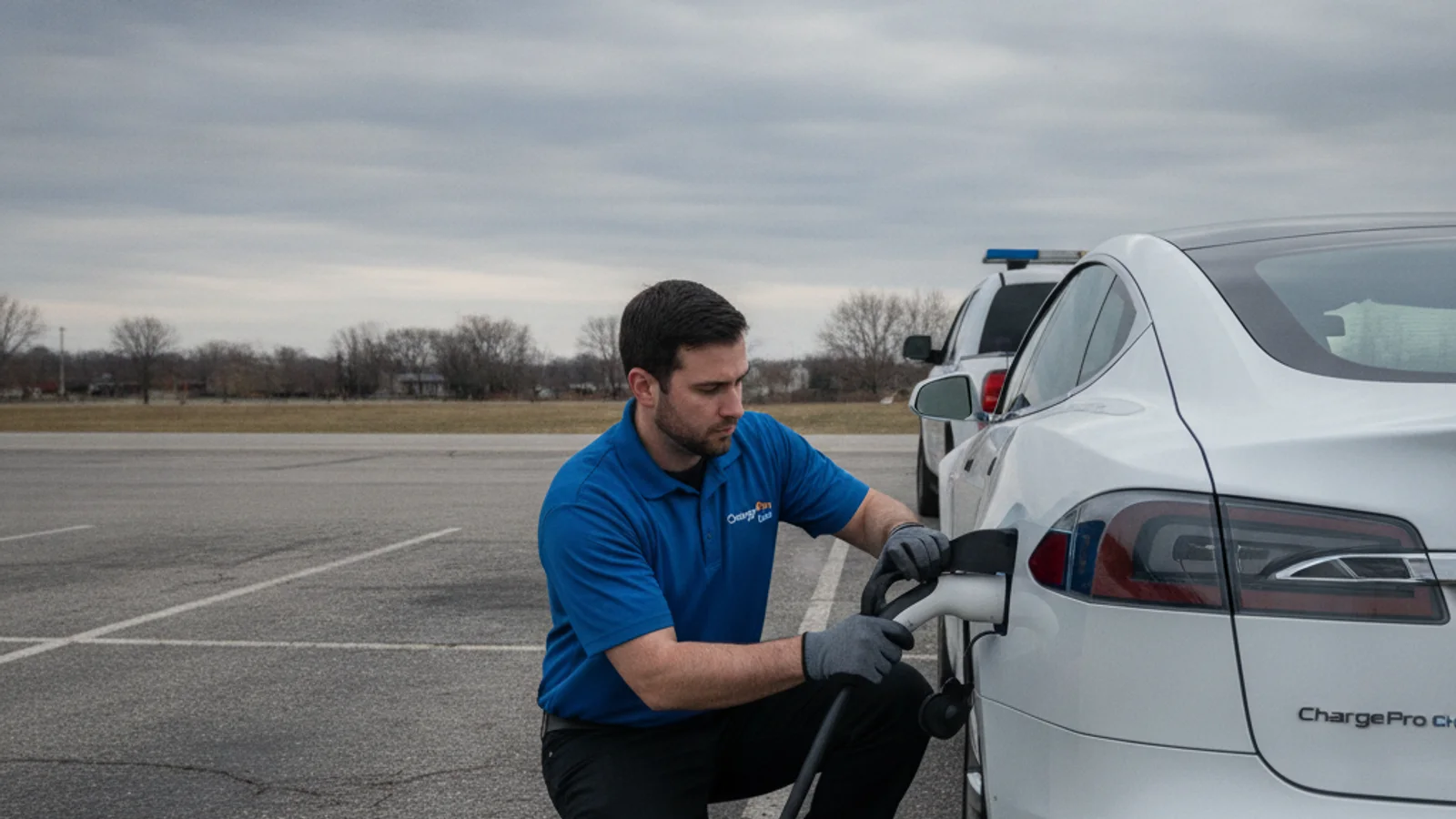
The cost question, without a made-up number
Tesla doesn’t publish a stable public price list we could verify for Illinois in 2026. Older roundups cite dispatch fees and per-mile towing. We won’t reprint those figures because they go stale. Open the Tesla app, request roadside, and read the estimate Tesla shows you. Tesla’s support site is the other check. Tesla sets that price, and Charge Pro CHI doesn’t.
If you’re inside the Basic Vehicle Limited Warranty, a covered event shouldn’t generate a Tesla invoice. If you’re past four years or 50,000 miles, expect Tesla to bill. Extended Service Agreement and CPO paperwork can change that, and your contract wins. A flat-tire call, a lockout, a 12-volt jump, and a tow can all price differently. None of those amounts belong here without a source we can cite.
Towing a Tesla usually means a flatbed. The car is heavy, and Tesla has tow rules. That’s between you, Tesla, and the tow operator. Charge Pro CHI doesn’t set Tesla’s rates, and it doesn’t bill Tesla’s tow.
Flat tires and lockouts stay in Tesla’s lane
Tesla’s roadside menu still matters for rubber and keys. A nail in a Schaumburg lot or a cut on a Chicago side street is a tire job. Out of warranty, Tesla can send a vendor to plug a tire or tow you to a shop. Tesla typically doesn’t carry a spare for a swap. Charge Pro CHI’s operators don’t repair tires. Don’t wait on a referral line for a tire patch.
A dead phone key can freeze you out. Tesla can try a remote unlock or send a tech. A Level 2 boost doesn’t open the doors.
What a local Level 2 boost covers that Tesla’s plan doesn’t
Tesla’s roadside menu is a net for defects, tires, locks, and a ride to a charger. A local boost is a different job. Independent operators in the Charge Pro CHI network bring 240-volt Level 2 power to the car. They handle Tesla and every major EV brand. They jump or replace a dead 12-volt on site when that’s the failure. They aren’t Tesla Service, and they don’t hold Tesla’s warranty.
Charge Pro CHI’s a referral line. It matches stranded EV drivers with local mobile rescue operators. It holds no trade license. It owns no trucks, employs no technicians, and performs no work. The operator quotes you before starting and bills you directly.
You stay with the car and you hear the price first. That’s the product Tesla’s plan doesn’t replace. If the pack is empty on a Cook County arterial, you can still charge on site. The same is true in a DuPage office lot or after a Will County commute. An on-site charge can get you to a Supercharger under your own power. Tesla’s tow still has a place when the car can’t move. It has a place when a tire is done. It has a place when a warranty defect needs the service center.
When Tesla should be your first call
Call Tesla first when you have a flat you can’t drive on. Call Tesla when you’re locked out and the phone key is dead. Call Tesla when a warranty message points at a defect. You may want Tesla to own the tow to service. Call Tesla when you want their tire or lockout vendor, not a charge.
Don’t make Tesla your only call when the car is fine except for range. A tow to a Supercharger solves that with a flatbed. A Level 2 boost is built for that stall.
When a local operator fits better
Choose the local path when the screens still work and the pack is the problem. Choose it when a 12-volt jump would restart the car without a wrecker. Choose it when you’re in street parking in Chicago and you want to drive off. The same goes for a driveway in Oak Park or a lot in Elk Grove Village. The operators quote by location and conditions. Confirm that quote before they plug in.
Chicagoland isn’t one stall type. A Highland Park driveway in Lake County, a Berwyn alley, and a Plainfield cul-de-sac are different jobs. The Census contrasts across those towns don’t set a rescue price. They only show the metro isn’t interchangeable. The operator prices the actual stop.
City-by-city pages start at EV charging in Chicagoland.
How to check Tesla’s price without guessing
Open the Tesla app and find Roadside on the car card. See whether Tesla still lists you inside the Basic Vehicle Limited Warranty. Ask Tesla to show any out-of-warranty estimate before you accept a tow. Compare that with a local operator quote for a Level 2 boost or a 12-volt jump.
Tesla’s site at tesla.com/support is the policy source. If the app and the site disagree, trust Tesla. We couldn’t confirm a 2026 Illinois fee schedule from Tesla’s public pages.
If you want a local quote instead, Charge Pro CHI connects you with an operator who prices the job first. Call (858) 925-5546 and we’ll match you with a local pro. That number is a referral line. It isn’t a promise of when someone arrives.
Is Tesla roadside assistance free while you’re under warranty?
Covered roadside events are included for four years or 50,000 miles under the Basic Vehicle Limited Warranty. Tesla decides what counts as covered. Confirm it in the app before anyone is dispatched.
Does Tesla roadside assistance charge the pack where you sit?
Tesla’s usual empty-pack path is a tow to a Supercharger or a service center. Tesla generally doesn’t send a mobile Level 2 charger. An on-site boost is a local operator’s job.
Who sets the price if you call a local boost instead?
The independent operator who takes the job sets the quote. Charge Pro CHI doesn’t set prices. The operator quotes before starting and bills you directly.