A dead pack on the Reagan Tollway isn’t a broken car. A bent control arm is. AAA’s usual answer is a flatbed. A mobile operator brings a 240V Level 2 source. They quote you first and bill you directly. Those are different jobs. Call the one that matches what actually failed.
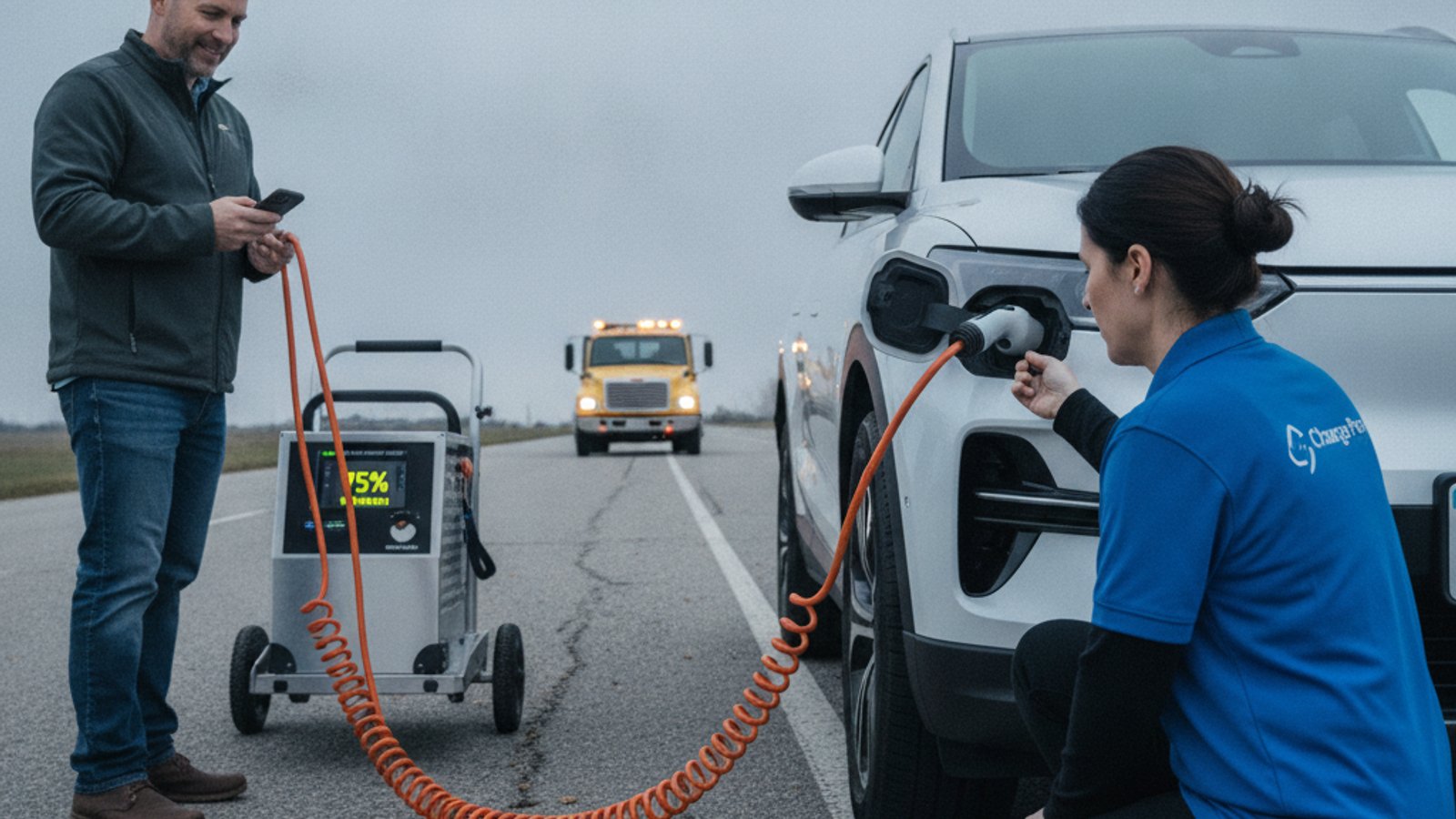
The stall and the tow aren’t the same problem
Club membership is built to move a car that can’t roll. An empty high-voltage pack isn’t that car. The motors still work. The tires still hold air. You ran out of energy. It’s the same hole a gas car hits on empty. Nobody tows a Civic to a pump. Not if a can of gas can come to the curb.
Chicagoland makes that mix-up painful in time. The club didn’t do something wrong. It did the job it sells. You asked for a move. You needed miles.
Chicago still has a huge older housing stock. About 68.6% of Chicago homes were built before 1980. Oak Park sits at 78.6%. Cicero is 90.2%, and Berwyn is 90.0%. Those blocks mean street parking and low garages. A charging setup still has to fit. It’s a smaller ask than a bed.
The same split shows up on the tollways. A stall on the Kennedy or the Dan Ryan is often an empty pack. I-55 is the same story. A stall with a wheel that won’t turn is a tow. Mixing those two on the same call is how people lose an afternoon.
What the club actually sends
You call the number on the card. You say the EV won’t move. The club sends a tow contractor. For most electric cars that means a flatbed. Dragging driven wheels can hurt the drivetrain. The car goes up on a bed.
The truck takes you to a charger or a dealer. Sometimes that’s the drop the dispatcher names. You plug in. You may need a ride if the charger is slow, busy, or offline. The club solved the location problem. It didn’t put energy in the pack on the shoulder.
Ask your club what they dispatch for an empty pack. Some regions have talked about charging vans. On the Tri-State, many members still get a truck with a bed. Confirm it before you wait.
A covered tow can still leave extra costs around the edges. You still spend time at the charger. You may need a second trip home. The car sat on a bed instead of driving away. See the hidden costs of towing a dead EV.
What a mobile charge actually is
Charge Pro CHI is a referral line. We match stranded drivers with independent local operators. We don’t own trucks. We don’t employ technicians. We don’t set prices. The operator quotes you before any cable goes in. Then they bill you directly.
That operator brings a 240V Level 2 source to the car. Teslas take a native NACS plug. Other brands use a CCS or J1772 adapter. Once charging starts, you typically add 10 to 20 miles of range. That takes 15 to 30 minutes. That window is charging time. It isn’t an arrival time, and we don’t publish one.
Ten to twenty miles usually gets you to a charger you already planned to use. You drive out under your own power. No bed. No sit at a public stall you didn’t choose.
If the 12V is the real failure, they can jump it on site. They can replace it on site too. Dark screens and silent door handles often point there, not at the big pack. Treat a 12V death as an empty pack and you’ll book the wrong truck.
Mobile EV charging is the dispatch path for a boost. Out-of-charge recovery is the path when the pack is the thing that hit zero.
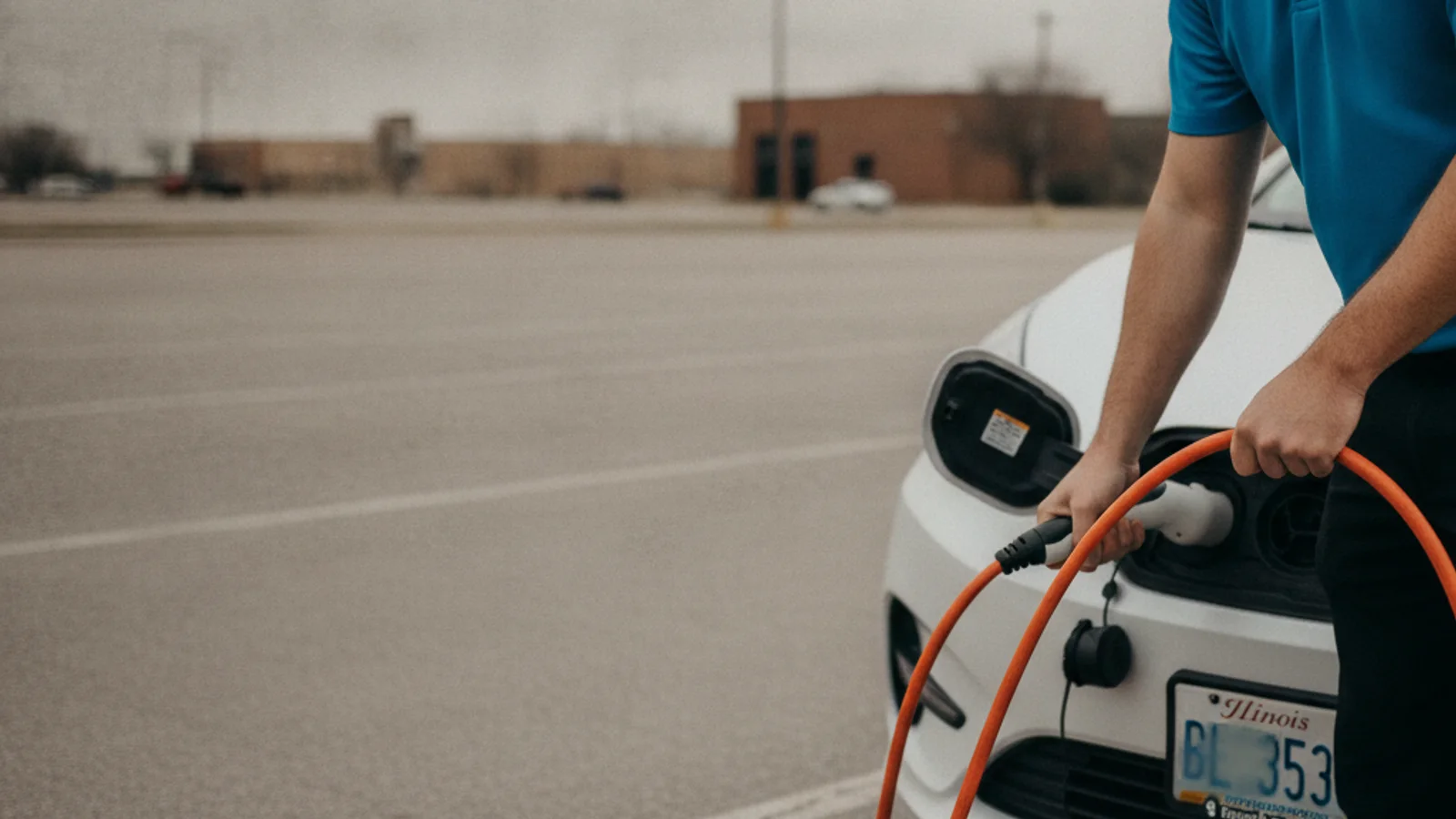
Coverage is the real comparison, not a yearly sticker
AAA sells a membership. You pay whether you stall this year or not. Jumps, lockouts, and covered tows live inside that plan. On-site charging isn’t the product the card is famous for.
A mobile operator sells a visit. There’s no membership through us. If you never stall, you never pay. Stall after a long dwell in Orland Park and you hear the number first. Same if a Naperville commute ends on empty.
That billing difference matters on a tollway shoulder. You know the quote while you’re still in the seat. You aren’t finding out at a dealer desk that you still have to charge.
People try to stack the two as if they were the same service. They aren’t. One product moves a car under a yearly plan. The other puts range in the pack and bills that visit. If you already keep a club for a gas car at home, keep it. Just don’t expect that card to refill a pack on Lower Wacker.
When the flatbed is the honest choice
Use the club when the car is actually hurt. Cracked suspension needs a bed. So does a wheel that won’t rotate, or crash damage. Range won’t fix a control arm.
Use the club when the destination is a shop, not a charger. Warranty work at a dealer in Schaumburg is a transport job. So is a body shop in Joliet.
Use the club when you want the car stored somewhere specific. A boost gets you rolling. It doesn’t trailer the car across Will County or out to McHenry.
Use the club when the household already pays for it on every vehicle. One plan can cover the gas SUV and the EV. That’s a real reason to use it when a tow is what you need.
When staying put for a boost is the better fit
Stay in a safe spot, hazards on, when the only problem is energy.
An empty pack on the Reagan Tollway needs miles, not a dealer drop. The same is true on the Dan Ryan and the Bishop Ford. I-90 and I-80 through the southwest suburbs work the same way. You want enough range to roll to a charger you can actually use.
A dead 12V looks like a brick. That isn’t a pack failure. Jumping or swapping the 12V on a Crystal Lake driveway is a different repair. So is a Waukegan street or a Gurnee lot. A service-center tow for that job is the long way around.
Parking decks downtown fight a rollback. So do office ramps in Arlington Heights and Hoffman Estates. Mall structures in Naperville do too. Height bars and tight turns stop a flatbed. A smaller charging setup can often still reach the stall.
Cicero and Berwyn streets are tight. Skokie neighborhood blocks are tight. Oak Park garages on pre-1980 lots are tight. If the car is otherwise healthy, bring energy to it. Don’t thread a bed down the block.
Once the operator is plugged in, the charge itself runs 15 to 30 minutes. That’s the part of the day you can actually plan around. We still won’t quote a clock for when someone pulls up.
See AAA or a local Tesla rescue in Chicago for the Tesla-side split.
Tesla’s line, the club, and a local operator
New Teslas include Tesla roadside for a limited window. Check the app for your VIN. That program is built around towing toward a Supercharger or a Tesla service stop. It isn’t a local operator standing at your bumper with Level 2.
After that window you’re back to a club, the automaker’s dispatch, or a local boost. None of those three replaces the other two. Tesla’s policy is Tesla’s. Read it in the app.
What Tesla roadside assistance covers here walks through that split for Model 3, Y, S, and X owners in this metro.
Keep both. Use the right one
This isn’t a loyalty test. Keep the club for flats, lockouts, and cars that can’t roll. Know the referral line for charge problems the club isn’t built to fix.
A stall on the Kennedy in stopped traffic is an energy problem. A bent rim on a Chicago street is a tow problem. The wrong truck for either one wastes the day.
Charge Pro CHI covers Chicagoland. That’s Chicago proper and the inner North Shore. It includes Evanston, Wilmette, Glenview, Northbrook, and Highland Park. Northwest suburbs include Palatine, Des Plaines, and Elk Grove Village. DuPage, Kane, Will, Lake, and McHenry County towns are in the area too. That runs from Wheaton and Aurora out to Waukegan, Joliet, and Crystal Lake.
FAQ
Does AAA charge a dead EV on the shoulder?
Ask your club what they send for an empty pack. Many members still get a flatbed to a charger or a dealer. On-site charging isn’t the standard product. Don’t wait on a shoulder assuming a cable is coming.
Do I need a membership for a mobile EV charge?
No. The operator quotes the visit, then bills you directly. There’s no annual plan through Charge Pro CHI. If you never need a boost, you never pay for one.
Can the operator charge a car that isn’t a Tesla?
Yes. The pros we connect you with carry a native NACS plug. They also bring CCS and J1772 adapters. Tesla and the other major brands sit in that set. Connector type isn’t a reason to call a tow.
If you’re already on a shoulder or a city block, call (858) 925-5546. We’ll connect you with an independent operator who can quote the job. The Chicagoland EV charging hub has the city list if you want that first.