A frozen Ioniq 5 charge port stuck on the cable usually frees from the trunk. Open the rear hatch and pop the small panel on the driver’s side. It’s the one tucked behind the tail lamp in the cargo liner. Pull the looped cable inside until you hear a click at the port. That retracts the pin even when the car’s software won’t. Lock and unlock the doors with the fob before you do that. A software lock often clears without opening any panels.
Why an Ioniq 5 freezes shut along the lake
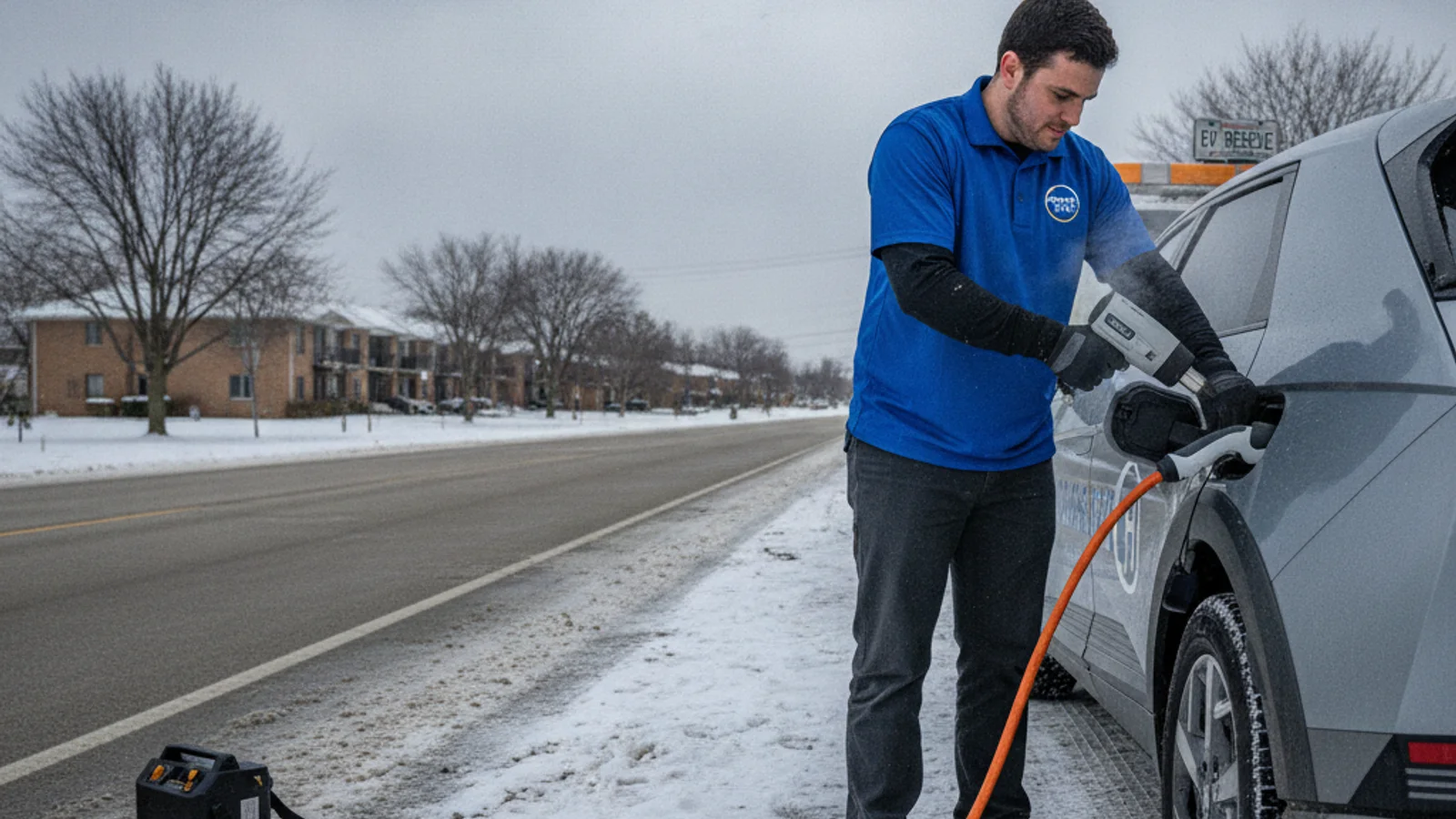
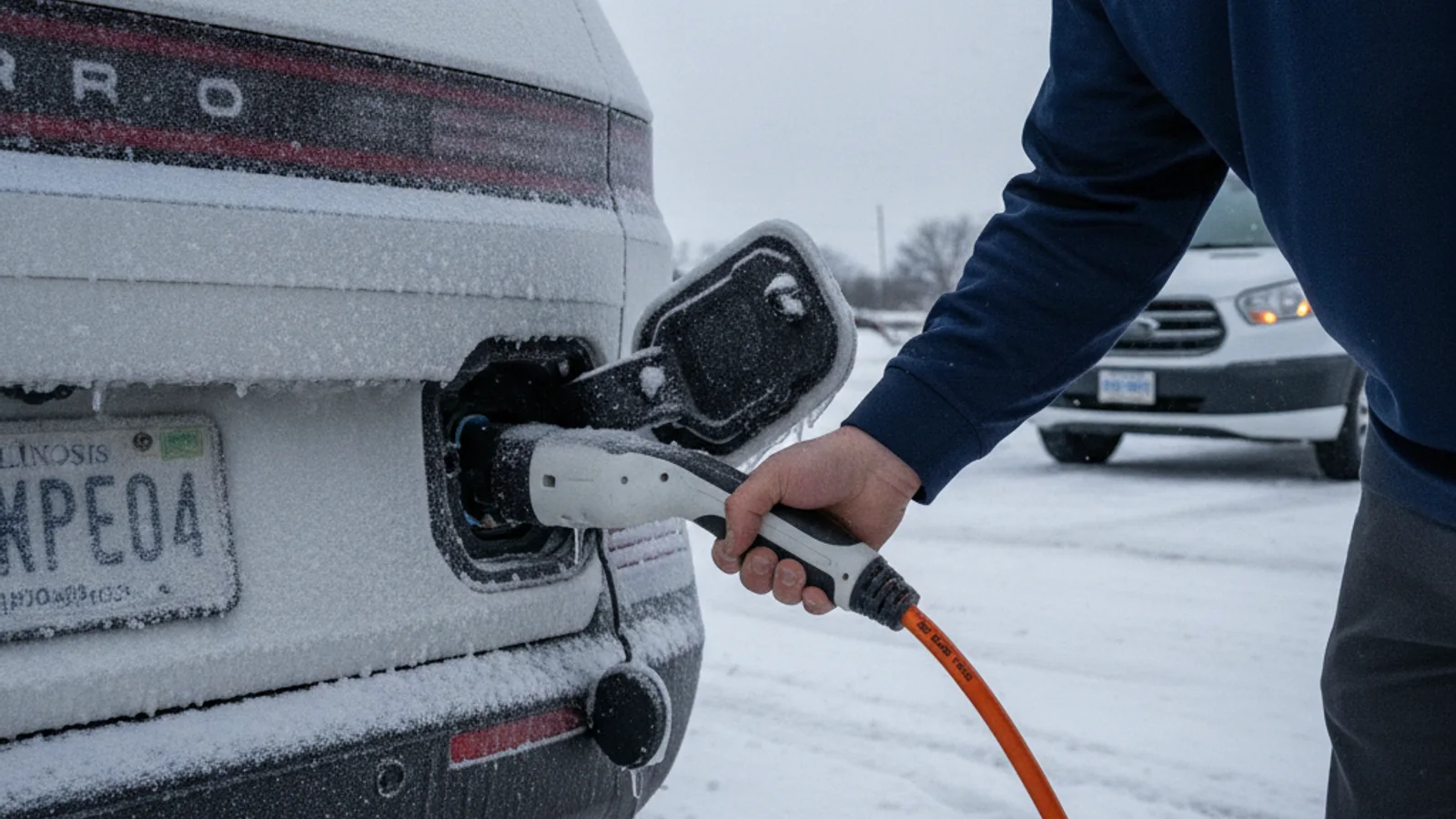
Chicagoland winters work on that Ioniq 5 charge door. Melted slush sits in the CCS port after a commute. Overnight it can freeze around the latch pin. That’s a physical bind, not just a software hiccup. You can get both problems on the same cold night.
Evanston’s 2024 population estimate sits at 76,006 people. About 71.2 percent of its housing predates 1980. Wilmette holds about 27,443 people, with 74.3 percent pre-1980 stock. Skokie sits just inland from the lake at 65,850 people. About 72.0 percent of its homes predate 1980 as well. Highland Park, in Lake County, is about 30,794 people. Roughly 60.6 percent of its housing is pre-1980. Chicago’s 2024 population estimate sits at 2,721,308 people. About 68.6 percent of city housing predates 1980.
Those older lakefront and near-lake blocks take spray all winter. On an Evanston street, the pin can ice by morning. The same pattern shows up in Wilmette and Highland Park. Waukegan, also on the lake, has about 88,570 people. A Lake County commute still throws slush at the port. Lake streets in Cook and Lake Counties add spray on top of the freeze.
This is the same winter bind as a stuck EV charge port in winter. The Ioniq 5 just has more moving parts to ice. Naperville, inland in DuPage, has a 2024 estimate of 153,124 people. Only 11.7 percent of its housing predates 1980. The Ioniq 5 still ices there on a hard night. Lake streets add spray that inland DuPage blocks don’t.
Two latches and two ways to get stuck
The Ioniq 5 doesn’t use a simple flap and pin. It has a motorized charge door, then a separate lock on the connector. The door motor and the pin are two failure points. Either one can leave you standing there with a heavy CCS handle.
The pin is a small metal actuator inside the port. It slides into a notch on the CCS plug once charging starts. Software is supposed to retract it when the session ends. Unlocking the doors is supposed to help that retract. A messy handshake with a public DC fast charger can skip the command. Ending a session at the wrong moment can skip it too. The pin stays in the notch, and the cable won’t come out.
Ice makes that worse on a North Shore night. Water in the port can freeze the pin in the extended position. Road grit can pack around the actuator too. If moisture is the mess, read water in an EV charge port after winter slush. Don’t keep jabbing the handle button while the pin is frozen in place.
The Ioniq 5 is built to take a fast DC session. Cold still slows that charge, covered in Ioniq 5 charging time in this climate. A stuck cable is a different problem from slow charging. Range isn’t the issue until you can’t unplug and leave. Keep the two stalls separate in your head. One is ice or software on the latch. The other stall is an empty traction pack.
The motorized door can ice shut on its own. That looks like a stuck cable even when no cable is in. If the door won’t motor open, treat it as a door freeze first. If a cable is already in, treat it as a pin lock first.
Resets to try before you open the cargo panel
Do the easy software checks first, before any panels. Those checks cost nothing and they often work.
Lock the car with the fob, wait a few seconds, then unlock it. Repeat that lock cycle three or four times. Don’t mash the buttons in a panic. Give the latch a beat between each press. Many software lockups clear on the second or third cycle. Wait for the mirrors or lights to finish moving before the next press.
End the session in the Hyundai Bluelink app if you can. A remote stop can send the retract command the station never finished. If the charger screen has a stop control, press it and wait. Watch the car’s charge indicators before you yank anything. If the car still shows an active session, the pin should stay.
If the doors won’t lock or unlock, stop cycling the fob. That points at a dead 12V on an Ioniq 5, not ice alone. The latch is an electronic part, not a manual catch. It needs 12V power before it will move. A dark dash and a stuck cable often share that 12V failure. Keep reading before you pull panels in the cold with no cabin power.
Ice, grit, and a pin that won’t move
Software is the usual story in mild weather. Along the lake in January, hardware binds more often. Melt, freeze, and road salt all reach that actuator. The pin can sit in the CCS notch and refuse to slide back.
Don’t pour boiling water on the port. Rapid heat can crack plastic and soak the electronics. Don’t pry the handle with a screwdriver. You can snap the pin or wreck the station’s connector. A plastic ice scraper on the door edges is as far as you go. Even then, be gentle and keep the scraper off the contacts.
If the door won’t motor open, ice may be on the door. The latch pin can be a separate bind. Let the cabin precondition if the car still wakes. Warm air near the port can loosen a door that is only glazed. It won’t melt a pin that is seized inside the latch.
Wipe the port with a dry cloth after a slushy DC stop. Close the door fully so melt doesn’t sit in the well overnight. Those habits don’t fix a pin that is already stuck. They cut the odds of a repeat freeze tomorrow.
Manual release: the cable in the cargo area
Hyundai put a mechanical override in the trunk for this exact stall. Use it after the fob and app tricks fail. Use it before you start forcing the handle.
- Make sure the car is off and unlocked, if it will unlock.
- Open the rear hatch and stand at the cargo opening.
- Look to the driver’s side of the liner, behind the tail lamp.
- Find the small rectangular plastic access panel in that corner.
- Pop the panel with your fingertips, or a plastic trim tool if it’s stiff.
- Inside you should see a short cable loop, often with a dark tab.
- Pull it toward the center of the cargo area in one steady motion.
- You want a clunk or click from the charge port, not a hard yank.
- Walk back to the port and pull the CCS handle straight out.
Snap the panel back when the cable is free. Hyundai publishes the diagram in the official owner’s manuals. Match the model year before you start digging in the liner. Cargo layouts shift a little across model years. The panel stays on the driver’s side behind the lamp on US cars.
If the cable feels frozen in the panel, stop pulling. Ice can bind that override cable too. Forcing it can snap the cable and leave the pin stuck. No click after a firm pull means a hardware bind. That’s the moment to stop the DIY pull.
Once the handle is out, inspect the port before you close the door. Look for ice, packed grit, or a pin that is still sitting proud. Don’t plug back in until the well is clear and dry. A second session into a frozen well can lock you again.
If you’re still plugged in at a public stall
A public DC handle that won’t release is a worse stall. You’re occupying a stall and holding a network’s hardware. Work the sequence in order so you don’t fault the unit.
First, run the fob lock and unlock cycle. Then stop the session in the Bluelink app. Then hit stop on the station screen if it has one. Give each step a few seconds to finish. The pin isn’t instant on these cars. Watch the screen and the car before you move to the next step.
If that fails, call the number printed on the station. Read them the station ID on the cabinet. Remote support can often force-stop the session from their side. That’s the cleanest way to free their connector. It also avoids leaving the stall in a fault for the next driver.
Use the trunk release after those two paths. A manual unplug can fault a station that is still talking to the car. You still have to leave if support can’t help. Pull the override, then report the stall to the network. Note the station ID so the next Ioniq 5 driver isn’t guessing.
A home Level 2 plug can ice after a wet day too. The same trunk cable frees that home connector. You don’t need a network call in a driveway. You still shouldn’t pry on the handle.
When a dead 12V is the real lock
The charge-port pin doesn’t run on its own. It needs the car’s 12V system to move. A weak 12V on a cold Chicago morning can freeze the latch logic. You may not even get into the car. You may not get the rear hatch open either. You may not hear a click if the actuator has no power.
Dead 12V signs are blunt: no lights, no dash, and an ignored fob. At that point the DIY list is short. You need the 12V brought back before the pin will listen.
The operators Charge Pro CHI connects you with can jump a dead 12V on site. They also handle Tesla and every major EV brand, including Hyundai. If the pack is still low, they can bring a 240V Level 2 source. It uses native NACS, or a CCS or J1772 adapter for non-Tesla EVs. That typically adds 10 to 20 miles in 15 to 30 minutes of charging. That’s charging time, not an arrival time.
For a stuck Ioniq 5, the first job is usually the latch and 12V. Boost the pack only if you still can’t drive after unplugging. There’s a non-Tesla EV rescue path for this mix. Ioniq 5 owners don’t get a Tesla-only truck. They need an operator with the right adapter who won’t force the pin.
When to stop pulling and call an operator
Stop pulling if the override cable does nothing. Stop if the cable feels ready to snap. That’s a mechanical bind or a broken actuator. More force makes a shop visit, not a free cable.
Stop if you can’t open the rear hatch. A dead 12V plus a frozen port isn’t a parking-lot DIY. Stop if the handle is damaged, or the station’s connector looks bent. Forcing a damaged handle can wreck the Ioniq 5 port. Stop if you can’t see into the cargo panel. Numb hands and a dark lot make a bad place to pop trim.
Don’t work the cargo panel on a live lane. A lakefront lot in Wilmette is one scene, a shoulder is another. The Wilmette lakefront stall guide covers that stretch. Don’t stand in traffic to pop a trunk panel.
Charge Pro CHI is a referral line, not a shop. It matches you with independent local mobile rescue operators. It doesn’t own trucks, and it doesn’t do the work. The operator quotes you before starting and bills you directly. Operators can free the cable, jump the 12V, or add range after unplugging.
If the release failed or the 12V won’t wake, call (858) 925-5546. We’ll connect you with a local operator who can take it from there.
Frequently asked questions
Why is my Ioniq 5 charge port stuck after charging?
The locking pin stayed in the CCS handle after the session. That’s usually a missed unlock command, ice on the pin, or both. Lock and unlock with the fob, then stop the session in Bluelink. Then use the charger’s stop control if it has one. If those fail, use the trunk release on the driver’s side.
How do I free a frozen Ioniq 5 charging cable?
Do the software resets first, then call the number on a public station. Use the cargo-area release only after those steps. Open the hatch and pop the driver’s-side panel behind the tail lamp. Pull the loop until you hear a click. Then draw the CCS handle straight out of the port. Don’t pry, and don’t use boiling water on the port.
What if a dead 12V is why the Ioniq 5 charger won’t release?
The port latch needs 12V power to retract. A dead 12V kills the fob, the app, and the electronic release. That’s an on-site jump, not a stronger pull on the cable. Once power is back, the pin can retract and the handle can come out. If you can’t wake the car, use the non-Tesla rescue path.