An EV maintenance schedule is short, and a few items still matter. Tires, brake fluid, cabin filters, and coolant stay on it. The 12-volt battery is the piece most owners here skip. After a freeze, the car won’t wake in a downtown garage. The traction pack can sit at 70 percent with dark screens.
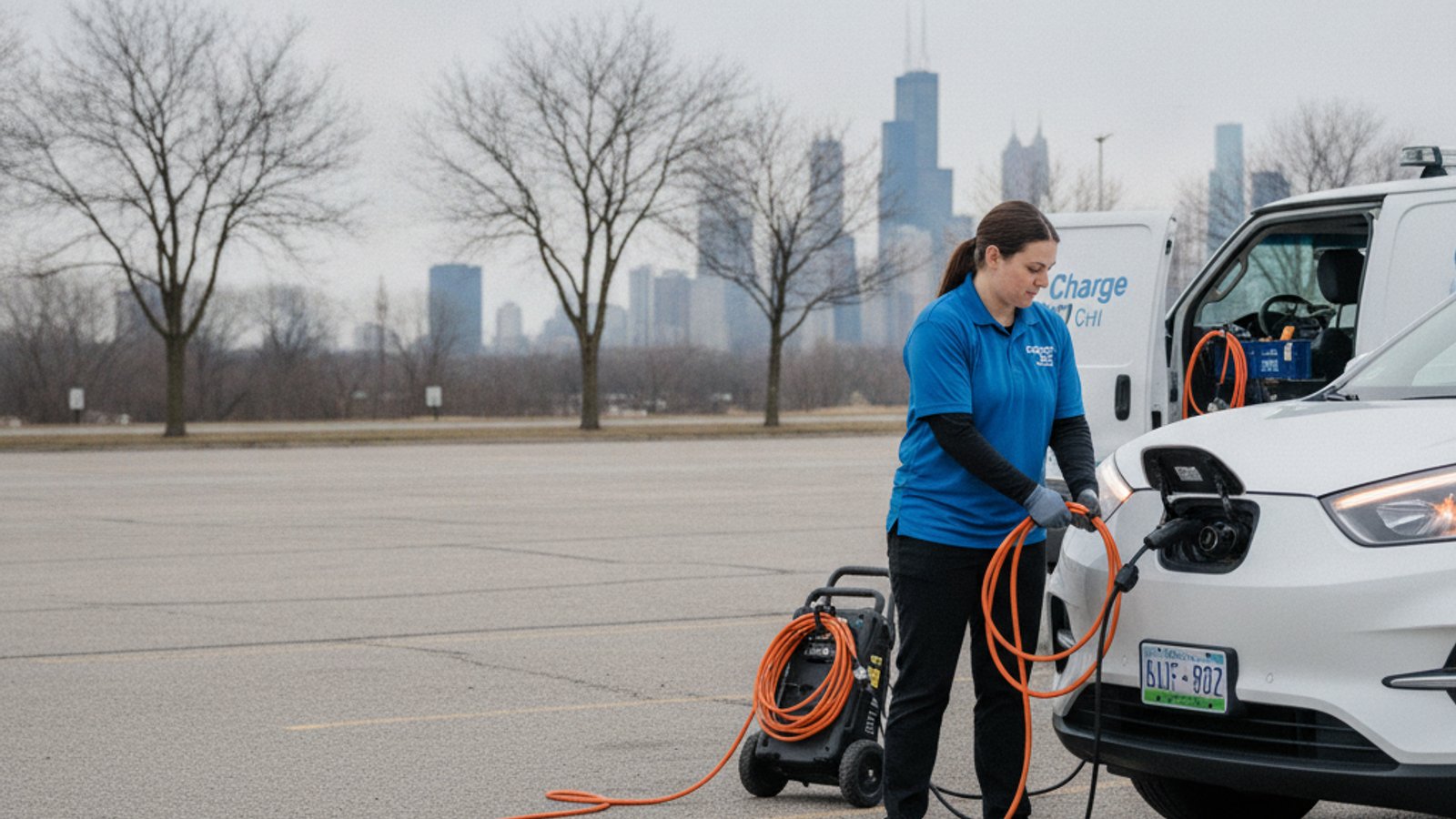
The schedule is short. The 12-volt is the hole.
Your EV still has two batteries, and they fail differently. The traction pack is the range number on the dash. The 12-volt is the small pack that boots the car. It runs locks, lights, and the wake computer. If that small pack is tired, the car acts dead. A full traction pack won’t help if the 12-volt is dead. The screens stay black, and the app may not answer. You can sit in a downtown stall with range left and still go nowhere.
That’s the Chicagoland miss on most calendars. Cook County’s big city makes it easy to skip. Chicago had 2,721,308 people in the 2024 Census estimate. ACS 2019-2023 puts 68.6% of Chicago housing before 1980. Oak Park is 78.6%. Cicero is 90.2%, and Berwyn is 90.0%. Evergreen Park is 87.7%, and Park Ridge is 67.1%. Those inner Cook cities keep a lot of older buildings. Cars sit in tight stalls and on the street overnight. A freeze finds a weak 12-volt there first.
Evanston, Skokie, and Wilmette sit in the same older pattern. ACS 2019-2023 puts Evanston at 71.2% pre-1980 housing. Skokie is 72.0%, and Wilmette is 74.3%. Highland Park in Lake County is 60.6% on that same measure. Libertyville is 34.7% on that same measure.
West and southwest housing is newer, not warmer. Naperville in DuPage County is 11.7% pre-1980. Schaumburg is 15.9%. Plainfield is 6.7%. Huntley in McHenry County is 3.8%. Gurnee is 9.5%, and New Lenox is 7.9%. Orland Park is 11.8%, and Bolingbrook is 12.3%. Attached garages are more common in those tracts. The 12-volt still sits in the same cold chemistry. A downtown stall just makes the no-start harder to hide.
Joliet, Aurora, and Elgin sit in the middle of that split. Joliet’s pre-1980 share is 39.0% in Will County. Aurora is 33.1% in Kane County. Elgin is 41.5% on the same ACS table. A car that sits at work in Schaumburg all day still cools off. The badge on the hatch doesn’t change that.
If the screens stay black, start with the 12-volt, not a tow. What happens when an EV’s 12-volt battery dies in the cold walks through the signs. Tesla owners see the same pattern on a Model 3, Y, S, or X. The operators we connect you with can jump a Tesla 12-volt on site. They handle every major EV brand the same way.
Oil is gone. A few fluids are not.
You can drop engine oil from the calendar. Spark plugs are gone, and so is a fuel filter. There’s no timing belt on an electric drive unit. Many EVs use a single-speed reduction gear. Your manual is the only source for a drain interval. The remaining list is small, and it’s easy to ignore. Nothing on it beeps like an old oil-life monitor. That’s why owners across Cook, Lake, and DuPage skip it. Kane, Will, and McHenry owners do the same. They roll into winter on the original 12-volt. Then they wonder why the car is mute on a Monday. The drive motors are sealed and usually need no routine service. They’re not the item that strands you in a garage.
Tires are the miles you’ll actually spend
An EV is heavy, and torque hits the pavement at once. Those two facts chew tread faster than a lot of owners expect. Low-rolling-resistance tires help range, not always tread life. Rotation is the shop visit you’ll feel if you skip it. Inner edges cup, and range starts to fade. The car can pull in a lane on the way through the city.
A common manual window is a rotation every several thousand miles. Treat it like the old oil visit, even with no pan to drain. Have the shop check pressure, inner wear, and alignment while the wheels are off. We couldn’t confirm one mile figure that covers every brand sold here. Your glovebox booklet sets the number, not this page.
A heavy EV is picky about alignment. A curb kiss on a tight Oak Park street can drag a tire down. The same thing happens in Berwyn or Cicero in a narrow stall. That’s weight plus a bent toe angle, not a mystery EV fault.
Regen hides brake wear. It doesn’t hide old fluid.
Regen does most of the slowing in daily driving. Pads and rotors often outlast the set you remember from a gas car. They still need a look at rotation time. Calipers can sit still for months of city regen, then stick. Brake fluid absorbs water as it ages. Many brands call for a brake-fluid change on a two or three year clock. That’s a calendar item, not a pad-wear item. Confirm the interval in the manual before you copy a neighbor.
A visual check at rotation time is enough for most years. If a pedal feels long, that’s a shop visit. If a corner smells hot after a garage exit, that’s a shop visit too. It’s not a mobile-charge visit either.
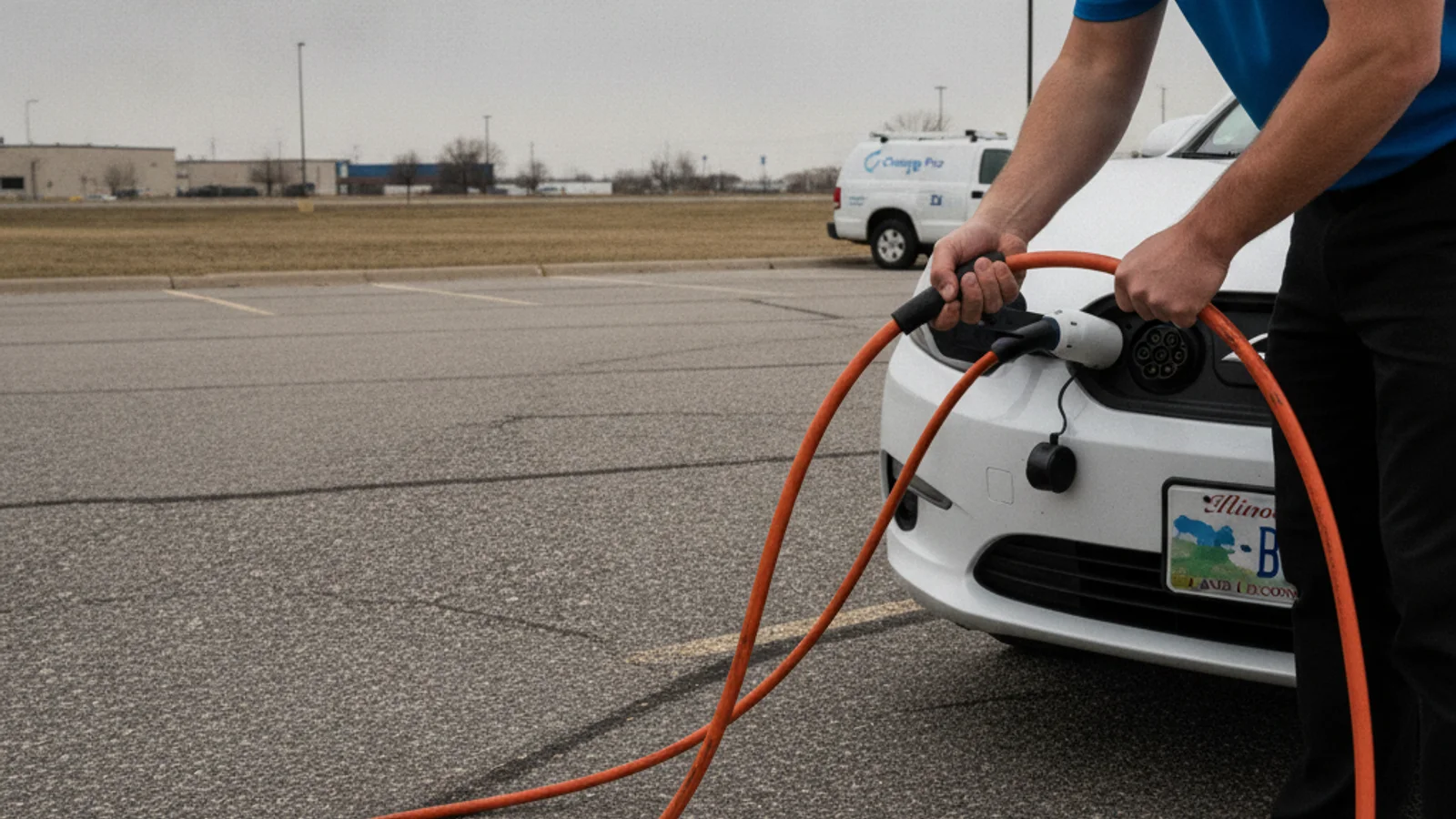
Cabin air, wipers, and the port in slush
Cabin filters clog even with no tailpipe. Pollen in spring and road dust after a thaw still get in. Swap the filter on the interval in the book. Wiper blades fail on the first dirty thaw more than on a calendar. Keep washer fluid up through the slush months.
Coolant is the shop item people forget after the 12-volt. The pack and the power electronics often share a dedicated loop. Some cars run two loops instead of one. Some loops are sealed for the life of the car. Some are not, and only the manual can tell you which. No blog can see into your reservoir cap from here. The manual, or a dealer printout, is the authority. Drive-unit fluid at high miles is the same story. If the book is silent, don’t invent a 100,000-mile service. If the book names a fluid, follow it.
If summer cooling is weak, that’s HVAC service, not a pack repair. The charge port is how the car eats. Look at the port before the first freeze. Ice, grit, and film collect around the door. If a cable won’t release, stop yanking. Frozen latches are a winter problem across this metro. Forcing the handle is how people break a door. A careful thaw and the in-car release come first.
Software updates are maintenance, even if no one lifts a wrench. Battery management changes arrive over the air on a lot of models. Install them when the car is parked and plugged in. They’re not a substitute for a 12-volt test.
Pack care is a habit, not a shop stamp
The traction pack doesn’t want an oil-change ritual. It wants charging habits that match the manual. A lot of brands still warn against living at 100 percent for daily use. We’re not publishing a universal 20 to 80 percent rule as law. Tesla’s public support pages are the place to read Tesla’s current language. Other brands put theirs in the app or the booklet. Follow that, not a neighbor’s screenshot of last year’s app.
Cold weather eats range. How much depends on the car, the speed, and the day. We couldn’t confirm one winter penalty that fits every model in this metro. Confirm it in the trip planner, not from a round number on a blog.
This research didn’t include a verifiable overnight EV tariff we can quote. Don’t copy a neighbor’s off-peak story as if it were a published rate. Your electric utility sets the price and the clock. Read the current tariff for your account. Or call the utility that serves your city. Do that before you change when you plug in.
Preheat while plugged in when you can. That’s cabin comfort and a gentler wake for the pack. How to care for an EV battery through an Evanston winter covers pack habits for a cold garage in that Cook County city. The same habits travel to Skokie, Wilmette, and Oak Park.
Build the year around freeze, not oil
Don’t wait for a dash reminder that may never come. Fold EV care into the seasons you already live.
Before the first hard freeze
Test the 12-volt before you need a jump. Many shops can load-test it in a few minutes. A lot of lead-acid auxiliaries are tired by year three or four. Newer Teslas and some other models use a lithium 12-volt with a different replacement path. Either way, confirm whether that small battery sits on your pack warranty. The brand’s booklet is the authority. We’re not publishing a coverage claim for every VIN. Replace a weak 12-volt before January, not after a no-start in a garage. Set a daily charge limit the way the manual describes.
At each rotation visit
Rotate tires. Inspect brakes. Check coolant level in any reservoir you can see without removing covers. Ask for a 12-volt health printout if the car is over three years old. Replace the cabin filter if it’s due. Look at the charge-port door while you’re there. That visit is your whole service for a lot of years. It’s not nothing, and it’s not an oil change with a new name.
When the car is a few years old
Brake fluid is the sleeper item on year two or three. Key-fob batteries die and mimic a 12-volt failure for a minute. Suspension bushings and ball joints carry extra mass. Have someone inspect them if you feel clunks over joints. None of those are EV mysteries. They’re just easy to postpone. The motor never asks for attention, so people wait.
High miles, still on the list
Some drive units want fluid at very high miles. Some coolant loops want a change on a long interval. A pack health readout is a diagnostic. It’s not a ritual you must buy every spring. If your pack has a warranty term, read it for your VIN. We didn’t confirm one year-and-mile figure that’s true for every car here.
The booklet still beats a blog
EV maintenance by brand is the sibling walkthrough for Tesla, Rivian, Ford, Hyundai, and Chevy. Use it as a map, then open the actual schedule for your model year. Intervals move by year and by software. Tesla publishes maintenance guidance on its support site. Rivian, Ford, Hyundai, Kia, GM, BMW, Mercedes, and the rest keep their own clocks. If a number in this article disagrees with the glovebox, the glovebox wins. If a number isn’t in the glovebox, it isn’t a requirement we can invent.
When the car is already dark
A missed 12-volt test doesn’t always end at a dealer. Some EVs won’t roll onto a wrecker if the parking brake stays electrically set. A jump or an on-site 12-volt swap is often the first move. If the traction pack is the empty one, that’s a different call.
The operators in this network bring a 240-volt Level 2 source to the car. Output is 9.6 kW, the same power level as a typical home wall connector. They use a native NACS plug. Non-Tesla EVs get a CCS or J1772 adapter. A 15 to 30 minute connection adds roughly 10 to 20 miles. That’s the size of a charge, not a promise of when someone arrives. Use those miles to reach a charger you already had in the plan.
Charge Pro CHI doesn’t own the trucks. It doesn’t employ the technicians or set the price. It matches you with independent local mobile rescue operators. Those operators quote you before they start, and they bill you directly. The pros we connect you with are licensed and insured. They serve the city and the suburbs in this service area.
If you’re stuck in a stall that won’t open, mobile EV charging is one path. A downtown no-wake after a freeze is usually the 12-volt. An empty pack after a long dwell is the other. Your EV died on Lower Wacker and won’t wake up is the same fork. Wake the computers, or add range, then move.
Call (858) 925-5546 when you need that match. The operator on the other end sets the work and the price. Confirm both before any work starts.