The scare on the Kennedy is heat-on dwell, not a surprise zero. Climate’s running and traffic is barely moving. The percent on the dash keeps falling anyway. The Dan Ryan does the same thing on the south side. You still have miles left. You have fewer than the last time you checked. This is the window to change what the car is doing. It’s not the moment you wait for zero.
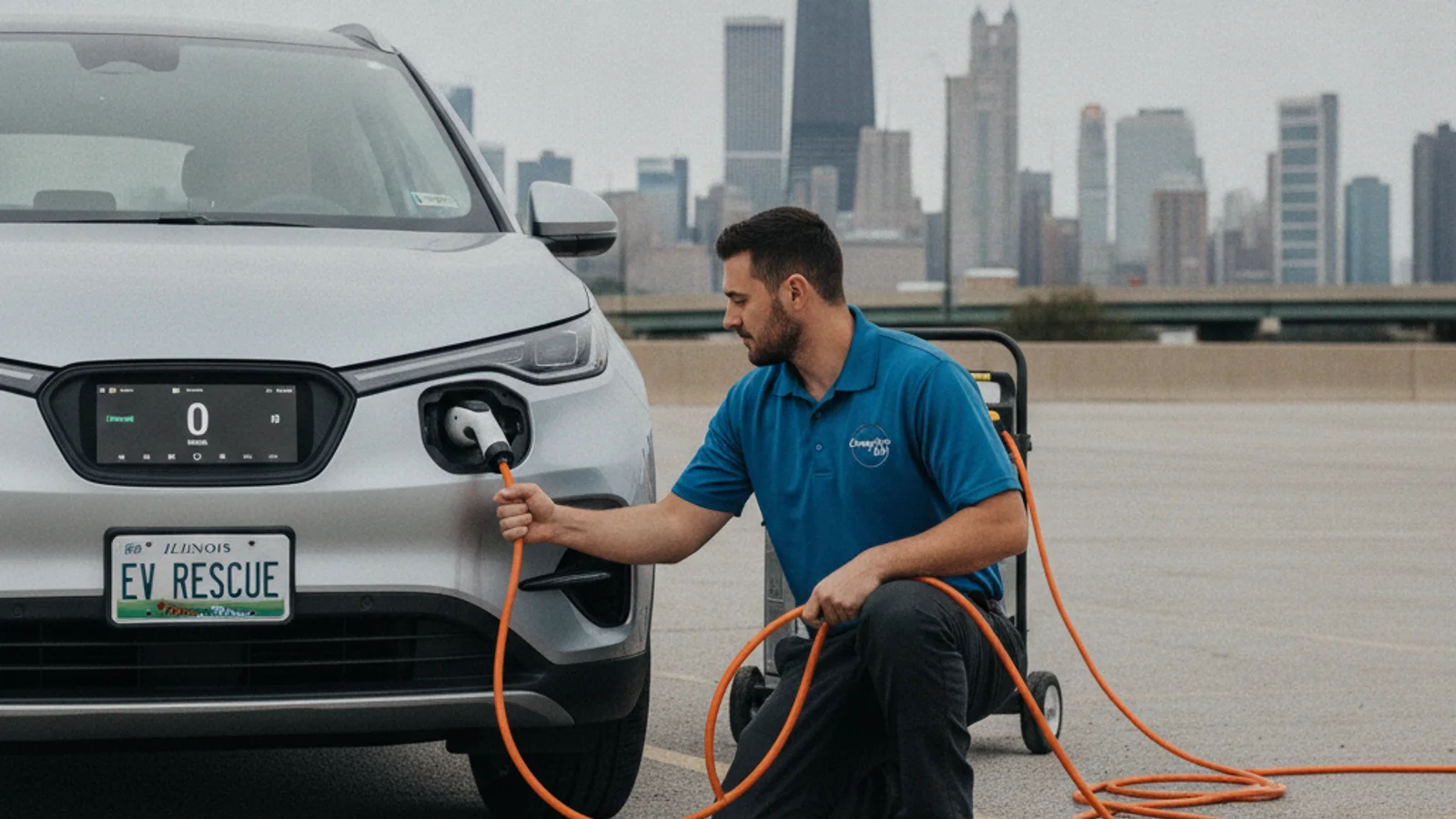
Heat-on dwell on the Kennedy and the Dan Ryan
Chicago is the big city in Cook County. Census ACS counts put Chicago at about 2.7 million people. A lot of that daily movement still squeezes onto two expressways. The Kennedy takes the north and northwest side. The Dan Ryan takes the south. When the pavement is hot, a crawl still costs energy. The pack isn’t only pushing the car. It’s also running the cabin climate.
That’s heat-on dwell. Wheels sit almost still. The compressor keeps working. The percent keeps dropping.
The U.S. Department of Energy’s AFDC publishes real-world range notes versus EPA stickers. Stop-and-go traffic is one of the cases that comes in under the window sticker. Check their current guidance if you want the method behind those comparisons. Cabin climate on a hot standstill stacks on top of that. You’re not bad at range. You’re in traffic the sticker didn’t fully price in.
Start routing as soon as you see low double digits. Single digits on either road means you pick a stall now.
What to do in the next two minutes
Say the percent out loud so a passenger can help. Hand them the nav. You watch the lane. They hunt a stall you can actually reach. If you’re solo, wait for a full stop, then open in-car routing. Don’t stare at your phone in a moving lane.
Get right as soon as you can do it safely. Left lanes on both expressways surge, then freeze. You want an exit option, not a wall of traffic.
Turn climate down now, before you bargain with the number. Fan-only beats a full compressor if you can stand it. Comfort is how heat-on dwell wins.
If the car still drives, you’re in a pack-range problem. If the car is dark and silent, you may have a 12-volt issue instead. Don’t mix those two diagnoses while you’re still rolling.
Read 10%, 5%, and 1% as decisions
The dash percent is usable charge, not the physical floor of the pack. Makers hold a buffer under displayed 0%. That keeps cells from a deep discharge. That buffer exists. It isn’t a published allowance you can spend in live traffic.
At 10%: You still have a planning window. A 300-mile EPA rating shows about 30 miles on paper at 10%. Heat-on dwell will take some of that. Keep rolling if you’re already moving. Pick a charger in the nav now.
At 5%: Most cars have already pinged you. Stop comparing networks and stall speed. Take a charger your car can actually reach. A slower stall you can reach beats a faster one you can’t.
At 1%: Brands differ on the last sliver. None of them publish a guaranteed limp distance for these expressways. Tesla, Hyundai, and Ford all keep some energy under the displayed floor. Don’t treat that reserve as a plan. Drop speed when traffic allows, and stay right. Aim for a place you can sit safely.
Tesla alerts have their own sequence. Tesla’s low battery warning walks through that path in more detail.
Kill climate first, then speed, then the small drains
On a summer crawl, the compressor is usually the largest optional load. Turn climate off if you can stand it. Fan-only is the next best step. Heated seats and the steering-wheel heater still draw power. Someone may have left them on from a cold start. Shut those off too.
When traffic actually opens, don’t sprint. Aerodynamic drag climbs fast with speed. A steady, lower, legal speed often buys more distance. A high-speed dash toward a pin often spends it.
Then cut the extras. Dim the display. Pause streaming. Turn off rear screens. Driver-assist cameras and computers still sip power in a crawl. You won’t recover a full charge. You may recover enough time to choose.
Turtle mode means stop stretching the math
Turtle mode is the nickname for the severe power limit near empty. Each brand implements it differently. None of them mean keep going.
Tesla
Tesla’s icon is a turtle. The state is very low charge, not an official turtle-mode name. It tends to show up with only a few estimated miles left. Hard acceleration is gone. Some features, including Dog Mode, can refuse to run. Keep driving after that warning and the car can fall to a crawl. Then it can stop. Check Tesla’s support pages for your model.
Rivian
Rivian also shows a turtle on the R1T and R1S. Output gets limited. The air suspension often locks at a fixed height to reduce drag. Displayed 0% isn’t always the last electron. It also isn’t a plan for the next exit.
Ford
The F-150 Lightning and Mustang Mach-E use a low-power mode. It can arrive with range still showing, not only at empty. The truck may push you to cut climate. The Lightning’s pack is large. One percent holds more energy than it does in a small crossover. Don’t do that math in a live lane.
Hyundai
The Ioniq 5, Ioniq 6, and Kona Electric limit power near the bottom. They also cut some climate functions. The Ioniq 5 in particular can feel normal, then cut hard. Don’t test the last indicated mile on the Dan Ryan.
Find a charger that’s working, not just a pin
A working stall you can reach beats a faster pin you can’t. In-car navigation should be the first tool. Tesla routing is strong on Supercharger stall status. Ford, Hyundai, and Rivian also pull availability into the car. Use that before you unlock a phone in moving traffic.
Once you’re stopped, or a passenger can look, PlugShare check-ins help. Filter for recent reports. A stall that was down yesterday is still down. Look for a recent check-in before you commit.
Look at how many plugs sit at a site. A single Level 2 in a garage can mean a wait. A multi-stall DC site is more likely to have an open cable. You don’t need a full pack. You need enough to stop making emergency choices. Charging levels when you’re stranded covers Level 2 versus a DC stall.
If remaining miles and the pin don’t match, stop guessing. Hunting a rapid charger versus calling for a boost is the next fork. Trust the range the car is showing you.
Stop while you still control the car
When the miles and the charger don’t add up, stop now. Park before the car parks you. Use a lot or a side street off an exit. A wide shoulder with sight lines can work too. The Kennedy and the Dan Ryan are packed when they crawl. They’re fast when they move. A silent EV in a live lane is a hazard for you and everyone else.
Flashers on. Get as far right as you safely can. Stay in the car on a shoulder if traffic is flying past. Get out only if you’re in immediate danger. Don’t walk along the expressway to find a charger. The car has to get there, or help has to come to the car.
If you’re already on those roads with the pack done, use the road-specific notes. Start with out of charge on the Kennedy. Or use out of charge on the Dan Ryan.
After a short charge, don’t spend it twice
A DC session back into double digits isn’t a full day of errands. Drive to a place you can finish charging, or drive home. Don’t jump back onto the Kennedy for one more stop. Heat-on dwell will take that cushion the same way it took the last one.
If you never reached a stall, stop calling this a routing problem. It’s a stranded-car problem, and that’s a different call.
What a mobile boost is, and what it isn’t
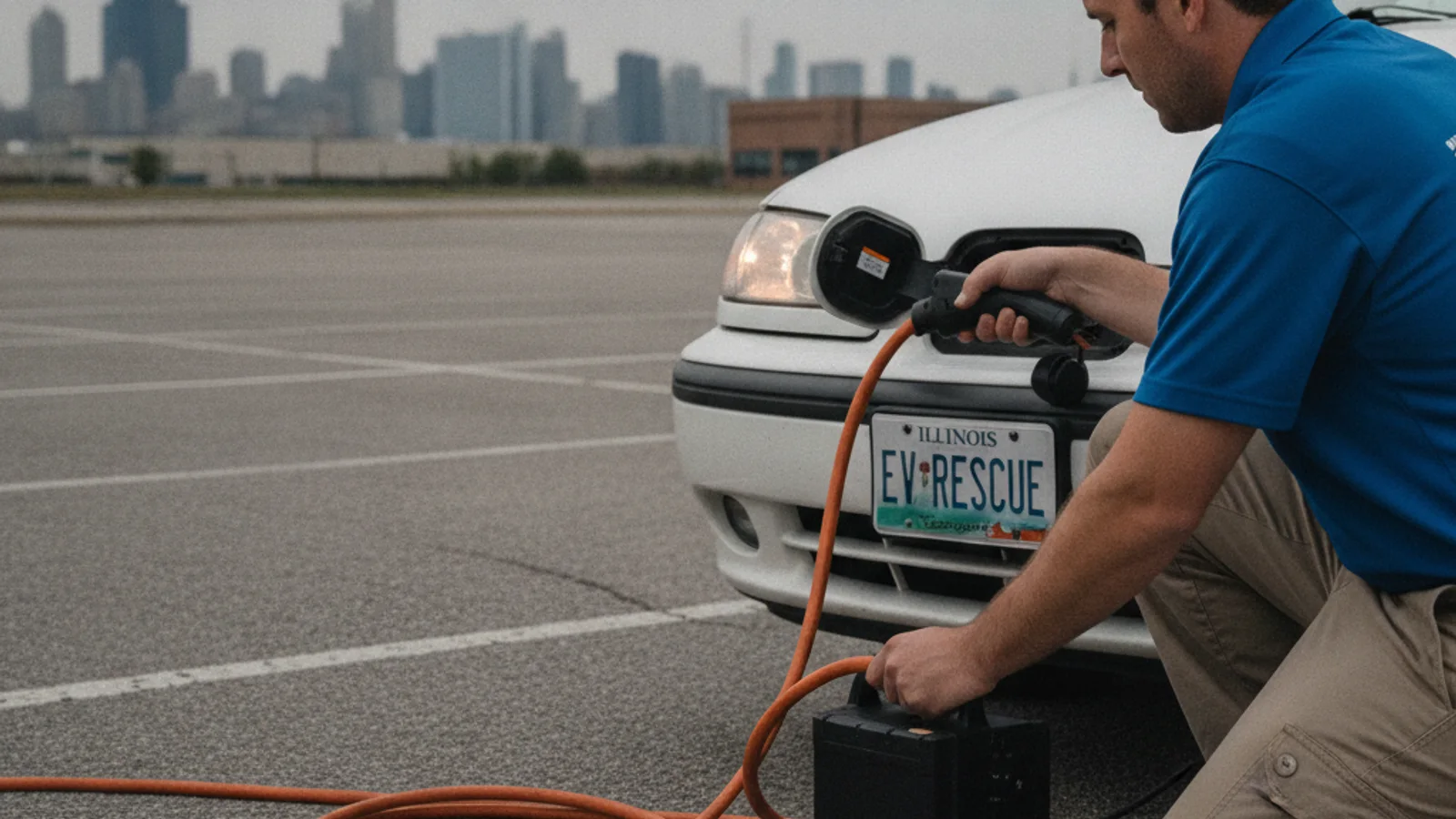
Charge Pro CHI is a referral line. We don’t own trucks, and we don’t plug in your car. We connect you with independent local operators. They bring a 240-volt Level 2 source to wherever you’re sitting. Teslas take a native NACS plug. Other EVs use a CCS or J1772 adapter. Typical charging time adds about 10 to 20 miles of range. That’s in 15 to 30 minutes of charging. That’s time on the plug. It isn’t an arrival time.
The operator quotes you before they start. They bill you directly. We don’t set the price.
If you’re already parked and empty, that’s out-of-charge recovery. If you still have a sliver, don’t risk another mile. That’s mobile EV charging. It’s enough energy to move, delivered where you are.
We serve Chicagoland, including Chicago and the rest of the metro. If you’re parked and too close to empty to keep rolling, call (858) 925-5546. We’ll connect you with a local operator.